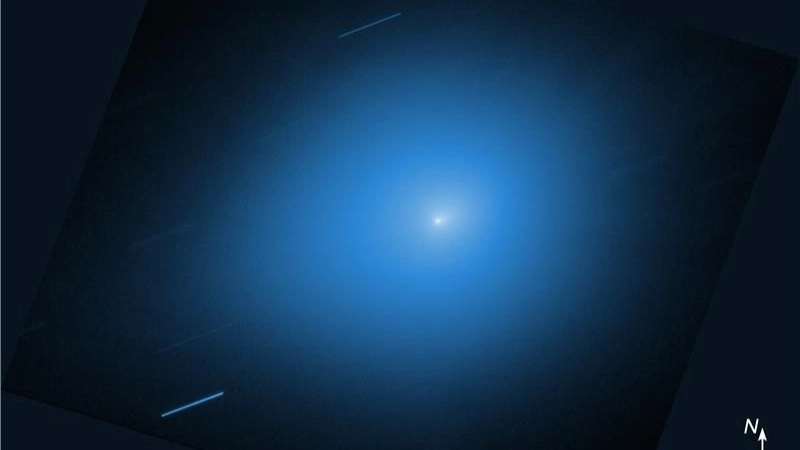
Harvard scientist makes 'extremely puzzling' find on 'alien spaceship' 3I/ATLAS

A Harvard scientist has explored another remarkable theory about 3I/ATLAS.
The comet made its closest approach to Earth at around 6am (UK time) on 19 December.
With it zooming through space at an estimated 153,000 mph, physicist Avi Loeb has speculated that 3I/ATLAS could be a 'potentially hostile alien threat'.
"Alien technology is a potential threat because when you go on a blind date of interstellar proportions, you never know whether you have a friendly visitor as your dating partner or a serial killer," the astrophysicist previously told Sky News.
Advert
After all, a spacecraft designed to search for extraterrestrial life has been tracking it.
Despite NASA's 'overwhelming evidence' pointing towards 3I/ATLAS being a comet, Loeb wrote in an October blog post that the presence of nickel and iron atoms in the comet’s coma meant that the temperature was too low for these elements to evaporate.
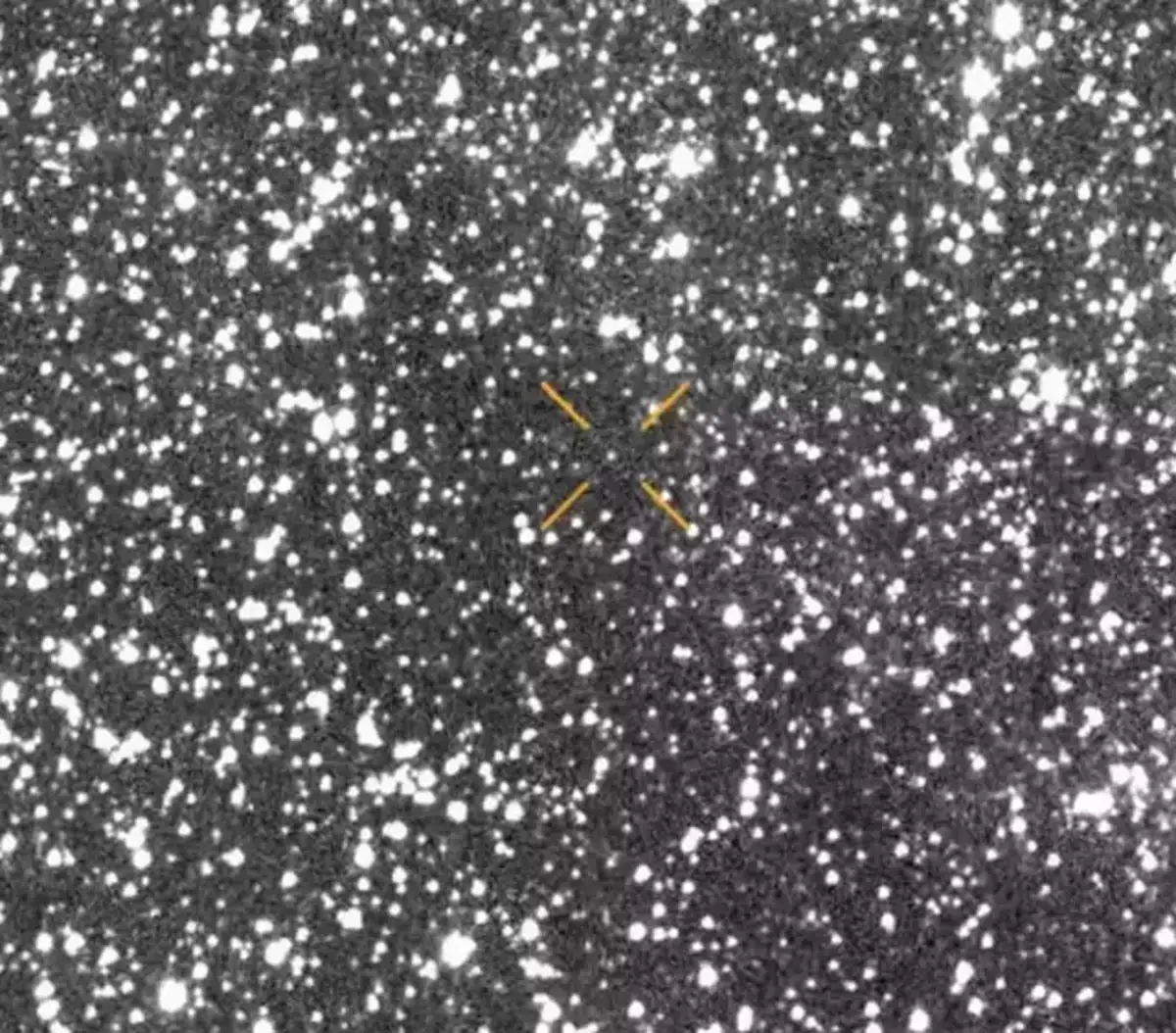
“At the distances at which comets are observed, the temperature is far too low to vaporise silicate, sulfide, and metallic grains that contain nickel and iron atoms," he said.
"Therefore, the presence of nickel and iron atoms in cometary coma is extremely puzzling.
"3I/ATLAS, which is a C2-depleted comet, exhibits extreme properties in the early phases of its activity with regard to the production rates and abundance ratios of nickel and iron."
In a recent blog post, Loeb also questioned the dust-to-gas ratios around 3I/ATLAS, raising questions about the object’s origin and how much is still unknown.
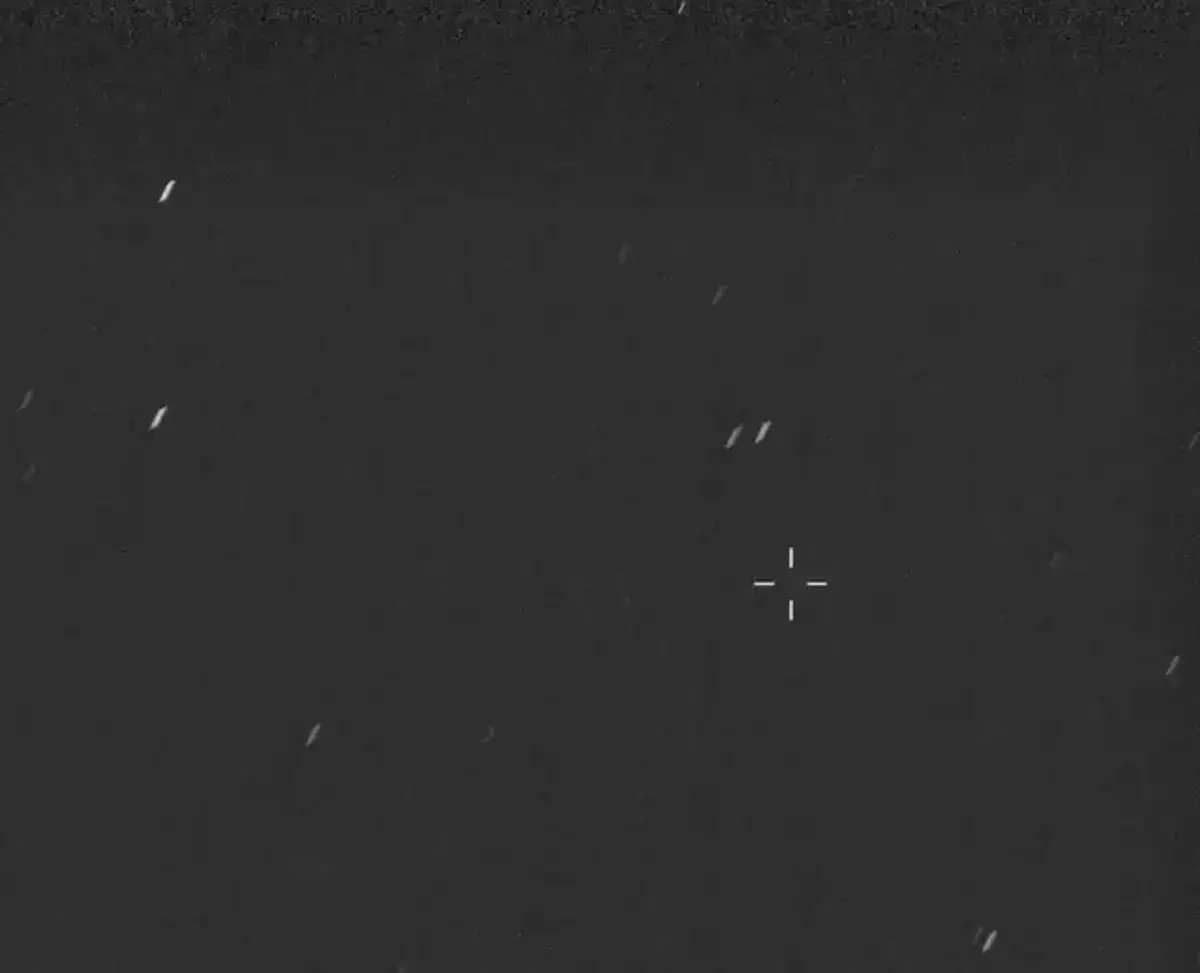
"The additional anomalies of 3I/ATLAS raise other questions about its nature, to which we do not have answers yet," he writes.
"Being honest about what we do not know would motivate us to seek answers. Those who are not curious about the unknown and fill their mind with pride about what they know end up being dull."
Meanwhile, lead NASA scientist Tom Statler has always maintained that all evidence points to 3I/ATLAS being nothing more than a comet.
"It looks like a comet. It does comet things. It very, very strongly resembles, in just about every way, the comets that we know," Statler said.
"It has some interesting properties that are a little bit different from our solar system comets, but it behaves like a comet. And so the evidence is overwhelmingly pointing to this object being a natural body. It’s a comet."
At its closest point to Earth, 3I/ATLAS was around 168 million miles (270 million kilometres) away.
Now, it's flying away from us, heading instead to the outer solar system and is due to pass Jupiter in early 2026.
By 2028, it will have crossed the orbits of Saturn, Uranus and Neptune.
 Anish Vij