ladbible homepage
ladbible homepage
  • iconNews
  • videos
  • entertainment
  • Home
  • News
    • UK
    • US
    • World
    • Ireland
    • Australia
    • Science
    • Crime
    • Weather
  • Entertainment
    • Celebrity
    • TV
    • Film
    • Music
    • Gaming
    • Netflix
    • Disney
  • Sport
  • Technology
  • Travel
  • Lifestyle
  • Money
  • Originals
    • FFS PRODUCTIONS
    • Say Maaate to a Mate
    • Daily Ladness
    • UOKM8?
    • FreeToBe
    • Citizen Reef
  • Advertise
  • Terms
  • Privacy & Cookies
  • License Our Content
  • About Us & Contact
  • Jobs
  • Latest
  • Archive
  • Topics A-Z
  • Authors
Facebook
Instagram
X
Threads
Snapchat
TikTok
YouTube
Submit Your Content Here
  • SPORTbible
  • Tyla
  • GAMINGbible
  • LADbible Group
  • UNILAD
  • FOODbible
  • UNILAD Tech
What happened during ‘most unethical psychological experiment ever’ that couldn’t happen today

Home> Community

Published 13:28 6 Nov 2025 GMT

What happened during ‘most unethical psychological experiment ever’ that couldn’t happen today

This is an experiment you'd definitely get cancelled for doing today

Brenna Cooper

Brenna Cooper

google discoverFollow us on Google Discover

Here is why a century-old experiment involving a young baby continues to cause so much controversy.

The ethics around scientific experiments have certainly come a long way in the past few centuries. However, there was once a time when researchers could get away with doing some pretty cruel things in the name of science.

From torturous research conducted on prisoners of war to the CIA attempting to weaponise mind control, history is littered with experiments which will leave you wondering, 'what were they thinking?'

And this brings us to the story of Little Albert, a young baby who was used by a psychologist to test the theory of classical conditioning on infants.

Advert
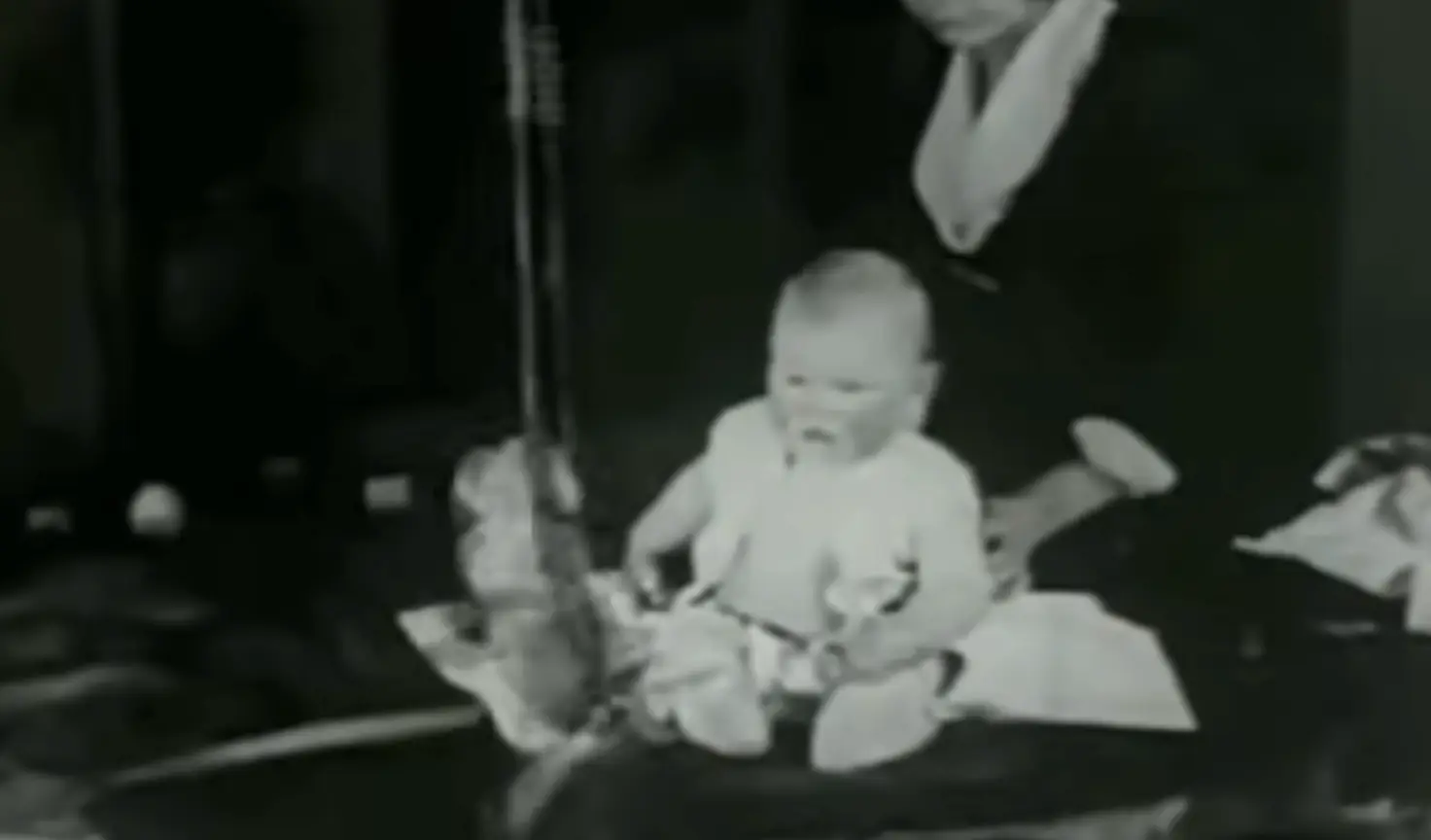
The controversial experiment occurred in 1920 (Watson and Rayner)

What was the 'Little Albert experiment'?

In 1920, US psychologist John B. Watson had been inspired by the work of Russian physiologist Ivan Pavlov, the man who famously performed experiments on dogs to develop his theory of classical conditioning.

Classical conditioning is a process where a neutral stimulus is paired with a conditioned response, eventually linking the pair.

For Pavlov, this was training dogs to salivate at the sound of a bell, but for Watson and his assistant Rosalie Rayner, this was to condition a phobia in a small child.

In order to conduct the experiment, the pair used a child nicknamed 'Little Albert' - a nine-month-old baby believed to be the child of a woman working in their building - and set about training the youngster to have negative reactions at the sight of an animal.

So how did they do it?
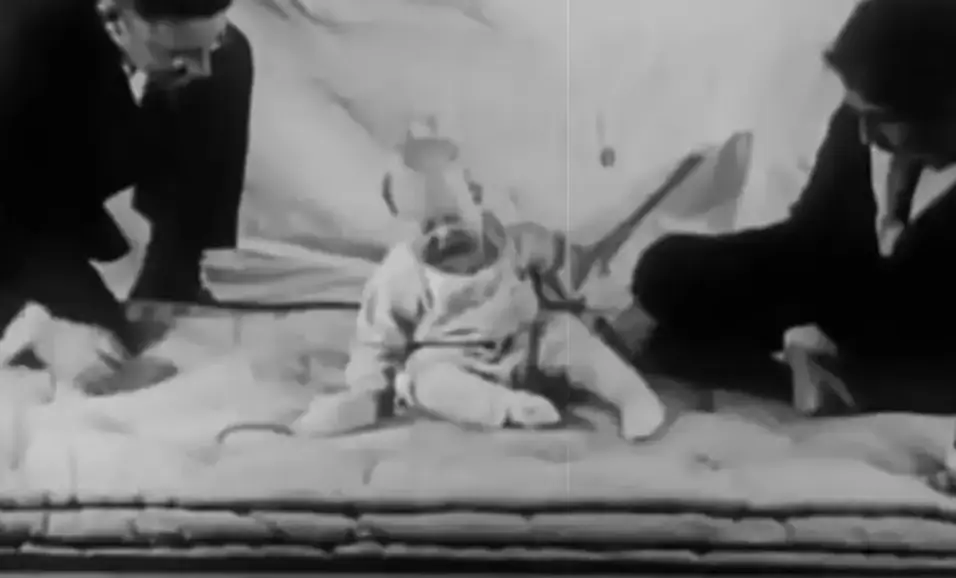
The child was conditioned to associate white rats with fear (Watson and Rayner)

Watson and Rayner presented Albert with stimuli such as a rabbit, monkey, a white rat, and burning newspapers to gauge his reaction.

The pair then began to make a loud noise whenever the white rat was presented to the child, leading to him associating the rodent with fear and bursting into tears at the sight of it.

Watson would ultimately deem the experiment a success after Albert eventually began to cry every time the rat was produced, regardless of whether or not a noise was made, proving that he'd been conditioned to associate the animal with fear.

However, the experiment would also raise several ethical concerns, as it turns out that traumatising a child in the name of science didn't go down well with everyone.

What happened to 'Little Albert'?

Little is known about Albert outside of the controversial experiment, including the child's identity.

It's widely accepted that Albert was the child of someone who worked in his building, who, upon finding out the experiment her child was being used in, was so horrified that she put a stop to his involvement.

As for Little Albert's true identity, he is believed to be either Douglas Merritte or William Albert Barger.

Barger would go on to live a long life, dying in 2007, and reportedly had an aversion to animals. Meanwhile, Merritte would pass away at a young age, dying of hydrocephalus at the age of six.

Featured Image Credit: Watson and Rayner

Topics: Community, Weird, Science, History

Brenna Cooper
Brenna Cooper

Brenna Cooper is a journalist at LADbible. She graduated from the University of Sheffield with a degree in History, followed by an NCTJ accredited masters in Journalism. She began her career as a freelance writer for Digital Spy, where she wrote about all things TV, film and showbiz. Her favourite topics to cover are music, travel and any bizarre pop culture.

X

@_brencoco

Recommended reads

Baby P’s mum’s fresh bid for freedom months after speaking about toddler’s death for the first time in 18 yearsMet Police/PAWhat astronauts actually eat in space after historic Artemis II launchJim WATSON / AFP via Getty ImagesThe Boys fans have missed massive plot points for final seasonPrime VideoUS Congressman issues bombshell warning over UFO secrets that would leave the world ‘unglued’Heather Diehl/Getty Images

Advert

Choose your content:

10 hours ago
12 hours ago
13 hours ago
a day ago
  • Tiktok/Emwebbrn
    10 hours ago

    Woman explains why she hosted 'sperm shower' at home after 'stressful' experience

    Emily Webb, 36, invited her friends over for the party

    Community
  • Marcos Alberti
    12 hours ago

    Photographer who captured women before, during, and after orgasm explains why they chose to participate

    2,000 women volunteered to take part in Marcos Alberti's 'The O Project'

    Community
  • Instagram/tatianaelizabethh
    13 hours ago

    Black woman who white influencer edited face onto for Instagram photo slams her 'unauthentic' justification

    Black model Tatiana Elizabeth said she wasn't 'born yesterday'

    Community
  • Getty Stock Photo
    a day ago

    How ‘Gen Z’ voice has changed how we’re all talking without people noticing

    Language is always changing, now it's Gen Z's turn to steer it

    Community
  • ‘Most unethical human experiment of all time’ was followed-up one month later to see true impact
  • What happened during ‘most gruesome death of all time’ that saw five divers instantly killed on oil rig
  • Simulation shows 'worst torture method ever' that was replicated in Saw movies
  • 'Most terrifying sound in the world' that was last thing people heard before death has shocking effect on your brain