ladbible homepage
ladbible homepage
  • Home
  • News
    • UK
    • US
    • World
    • Ireland
    • Australia
    • Science
    • Crime
    • Weather
  • Entertainment
    • Celebrity
    • TV
    • Film
    • Music
    • Gaming
    • Netflix
    • Disney
  • Sport
  • Technology
  • Travel
  • Lifestyle
  • Money
  • Originals
    • FFS PRODUCTIONS
    • Say Maaate to a Mate
    • Daily Ladness
    • UOKM8?
    • FreeToBe
    • Citizen Reef
  • Videos
  • Advertise
  • Terms
  • Privacy & Cookies
  • License Our Content
  • About Us & Contact
  • Jobs
  • Latest
  • Archive
  • Topics A-Z
  • Authors
Facebook
Instagram
X
Threads
Snapchat
TikTok
YouTube
Submit Your Content Here
  • GAMINGbible
  • LADbible Group
  • UNILAD
  • SPORTbible
  • Tyla
  • FOODbible
  • UNILAD Tech
Famous Bigfoot footage stabilised by AI to make it clear what it actually is
Home>Entertainment
Published 18:22 3 Apr 2023 GMT+1

Famous Bigfoot footage stabilised by AI to make it clear what it actually is

Some of the most famous footage of Bigfoot looks a lot different when AI stabilised it

Ben Thompson

Ben Thompson

google discoverFollow us on Google Discover

The mystery of Bigfoot has captured the imaginations of many for decades, and despite the fact most of the time it turns out to just be a bloke in an animal suit, the enthusiasm for tracking down the beast doesn't seem to waiver.

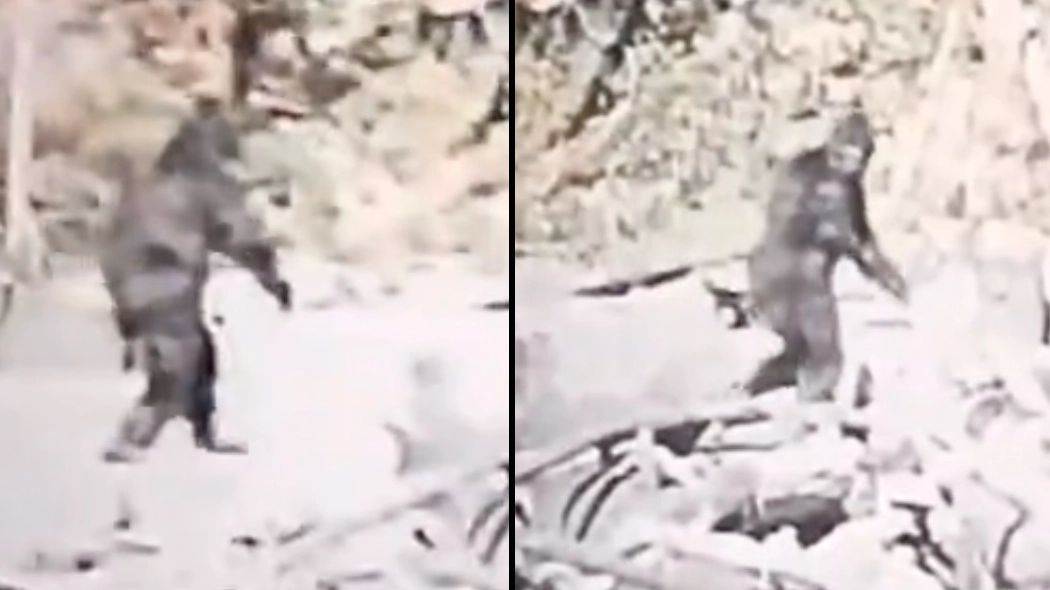
But now, thanks to AI technology, one of the most famous videos claiming to capture the creature has been 'stabilised', offering a clearer look at the hairy figure.

The footage in question was shot by Roger Patterson and Robert Gimlin in October 1967, and supposedly shows Bigfoot walking through Bluff Creek in California.

Advert

At one point in the footage, the hairy figure turns back to look at the camera, before carrying on.

The footage was the linchpin of the Bigfoot movement and has been frequently put forward as definitive proof of the existence of the humanoid beast.
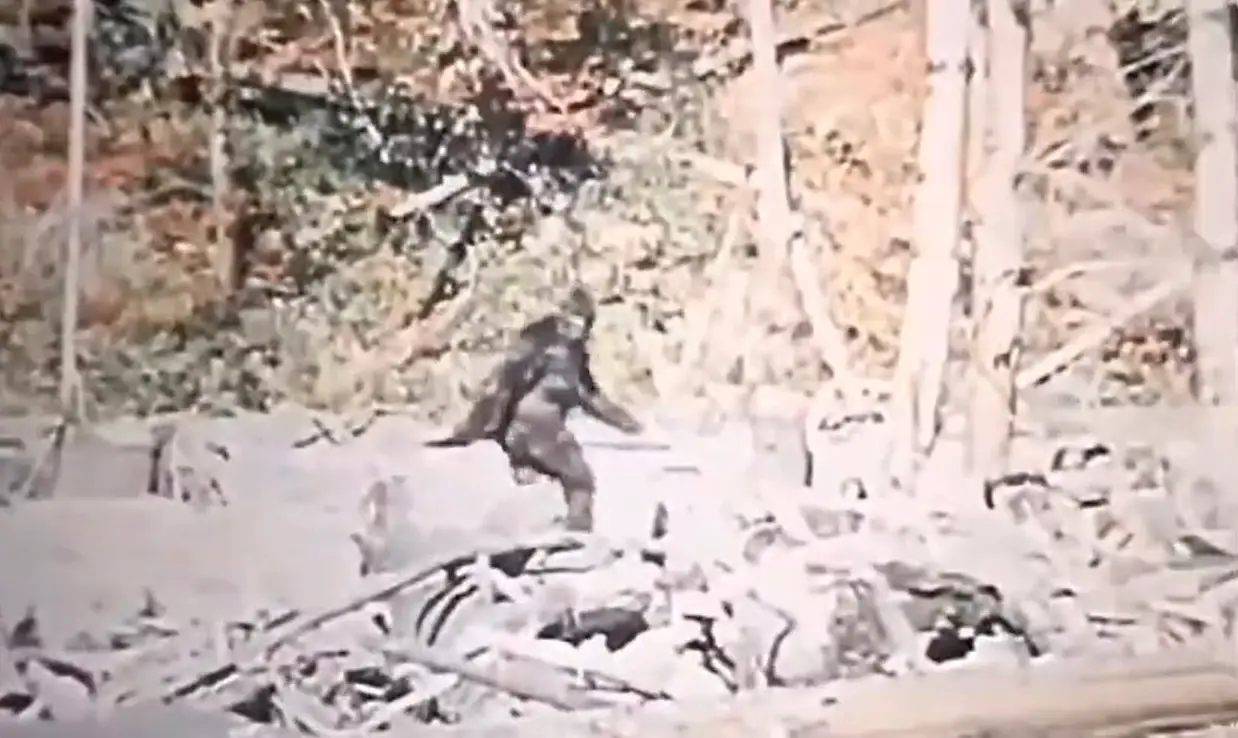
The footage of Bigfoot was originally shot in 1967.
Twitter/@rowancheung

However, the infamous video has now been stabilised using AI technology, with the results shared on Twitter by Rowan Cheung.

Cheung, who documents developments in AI technology, accompanied the video with the caption: "Experts used AI and computer vision to stabilize viral footage of the Patterson-Gimlin Bigfoot Film from 1967."

Without the blurriness and shakiness of the original footage, Bigfoot starts to look like... a man in a gorilla suit. Who'd have thought it, eh?

Well, it's safe to say the video solicited a strong response from viewers, with one joking: "I bought that same suit for Halloween."

Another wrote: "This is the ai work we needed."

Meanwhile, a third weighed in: "Clearly a guy coming home in the morning after some strange costume party," with a fourth adding: "Just some bro out for a stroll."

Bigfoot - also commonly referred to as Sasquatch in Canadian and American folklore - is a large, hairy ape-like creature said to roam about in the woods.

They're probably right, to be fair.
Twitter

Hundreds of images and videos claiming to show the lurking figure have emerged over the years, but some have actually suggested the evidence from a man named Josh Highcliff is the most convincing of all.

Highcliff's video, shot in Florida, appeared to show a hairy figure sitting by a lake.

His video was widely praised as the 'best' footage of Bigfoot around.

One user commented: "I think it's safe to say that this is actually one of the most real Bigfoot video out there.

"This doesn't look like some guy in a suit ripping a tree apart. That's some of the brute force right there. Ripping a tree ain't easy.

"This is definitely 100 percent real footage to me. No CGI, no video editing just pure Bigfoot video and I love it."

Another admirer wrote: "Honestly, this is probably the best footage ever recorded. Amazing that it’s not talked about more."

Whether or not AI would dampen the enthusiasm of Bigfoot watchers remains to be seen, but given that they've been on the lookout for the forest-roaming beast for over fifty years, I wouldn't bet on it.

In the meantime, maybe AI could have a crack at the Loch Ness Monster.

Featured Image Credit: Twitter / @rowancheung

Topics: Bigfoot, AI, Artificial Intelligence, Twitter

Ben Thompson
Ben Thompson

Recommended reads

Concern grows among tourists as toxic fish with razor sharp teeth are invading holiday hotspotGetty Stock ImageDoctor shares five early warning signs of stomach cancer that most people missGetty stockMan who suffers from vicious hair pulling condition shares first sign he knew something was wrongSuppliedFIFA slammed after banning entire country from all football in 'unfair' and 'flawed' decisionTasos Katopodis - FIFA/FIFA via Getty Images

Advert

Choose your content:

2 hours ago
4 hours ago
5 hours ago
7 hours ago
  • Jason Kempin/FilmMagic
    2 hours ago

    Bam Margera’s parents reveal Jackass stunt that still annoys them even though it never made the cut

    Bam Margera’s parents, April and Phil, reflected on the franchise during the Jackass: Best and Last premiere

    Entertainment
  • Nickelodeon
    4 hours ago

    Former Nickelodeon star Josh Peck reveals amount he was paid for Drake & Josh

    Josh Peck was one half of Nickelodeon's Drake & Josh until 2007

    Entertainment
  • X
    5 hours ago

    Harry Styles fans express concern during Wembley gig as he braves 37°C heatwave

    They're worried about how he is coping with the physical demand of touring in such extreme temperatures.

    Entertainment
  • Bob Riha, Jr./Getty Images
    7 hours ago

    Two and A Half Men's Jake actor completely unrecognisable a decade after quitting acting in religious 'meltdown'

    Angus T Jones at one point earned almost $300,000 an episode, but quit acting after publicly slamming the show

    Entertainment
  • Expert says there are 'only five jobs' that will remain unaffected by AI by 2030
  • Five job roles cut by Oracle as 10,000 lose jobs due to AI pressures
  • Expert warns 'only five jobs' will remain unaffected by AI by 2030
  • AI could wipe out 3 million of these kind of jobs in the UK by 2035