ladbible homepage
ladbible homepage
  • iconNews
  • videos
  • entertainment
  • Home
  • News
    • UK
    • US
    • World
    • Ireland
    • Australia
    • Science
    • Crime
    • Weather
  • Entertainment
    • Celebrity
    • TV
    • Film
    • Music
    • Gaming
    • Netflix
    • Disney
  • Sport
  • Technology
  • Travel
  • Lifestyle
  • Money
  • Originals
    • FFS PRODUCTIONS
    • Say Maaate to a Mate
    • Daily Ladness
    • UOKM8?
    • FreeToBe
    • Citizen Reef
  • Advertise
  • Terms
  • Privacy & Cookies
  • License Our Content
  • About Us & Contact
  • Jobs
  • Latest
  • Archive
  • Topics A-Z
  • Authors
Facebook
Instagram
X
Threads
Snapchat
TikTok
YouTube
Submit Your Content Here
  • SPORTbible
  • Tyla
  • GAMINGbible
  • LADbible Group
  • UNILAD
  • FOODbible
  • UNILAD Tech
Scientists Say Recent Rock Discovery Could Completely Rewrite History About Life On Earth

Home> News

Published 02:22 14 Apr 2022 GMT+1

Scientists Say Recent Rock Discovery Could Completely Rewrite History About Life On Earth

The rocks found in northern Québec, Canada, could even date back to 4.2 billion years, questioning the existence of life on Earth.

Charisa Bossinakis

Charisa Bossinakis

google discoverFollow us on Google Discover

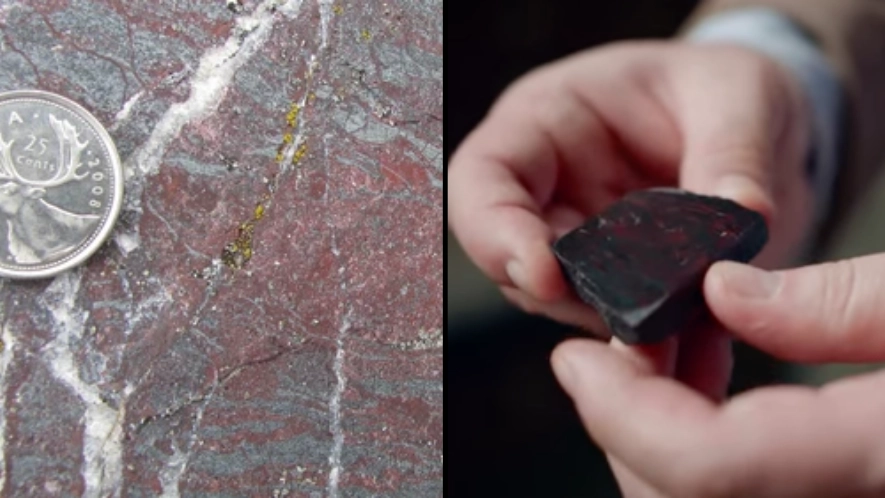
Scientists believe they have found the oldest fossils on the planet and say they could date back at least 3.75 billion years ago.

If this is proven, then it could challenge our understanding of life on our planet and rewrite the history books.

The fossils found in northern Québec, Canada, were collected by Dominic Papineau, an associate professor in geochemistry and astrobiology at University College London (UCL).

Papineau made this discovery while on an expedition to Québec’s Nuvvuagittuq Supracrustal Belt in 2008.

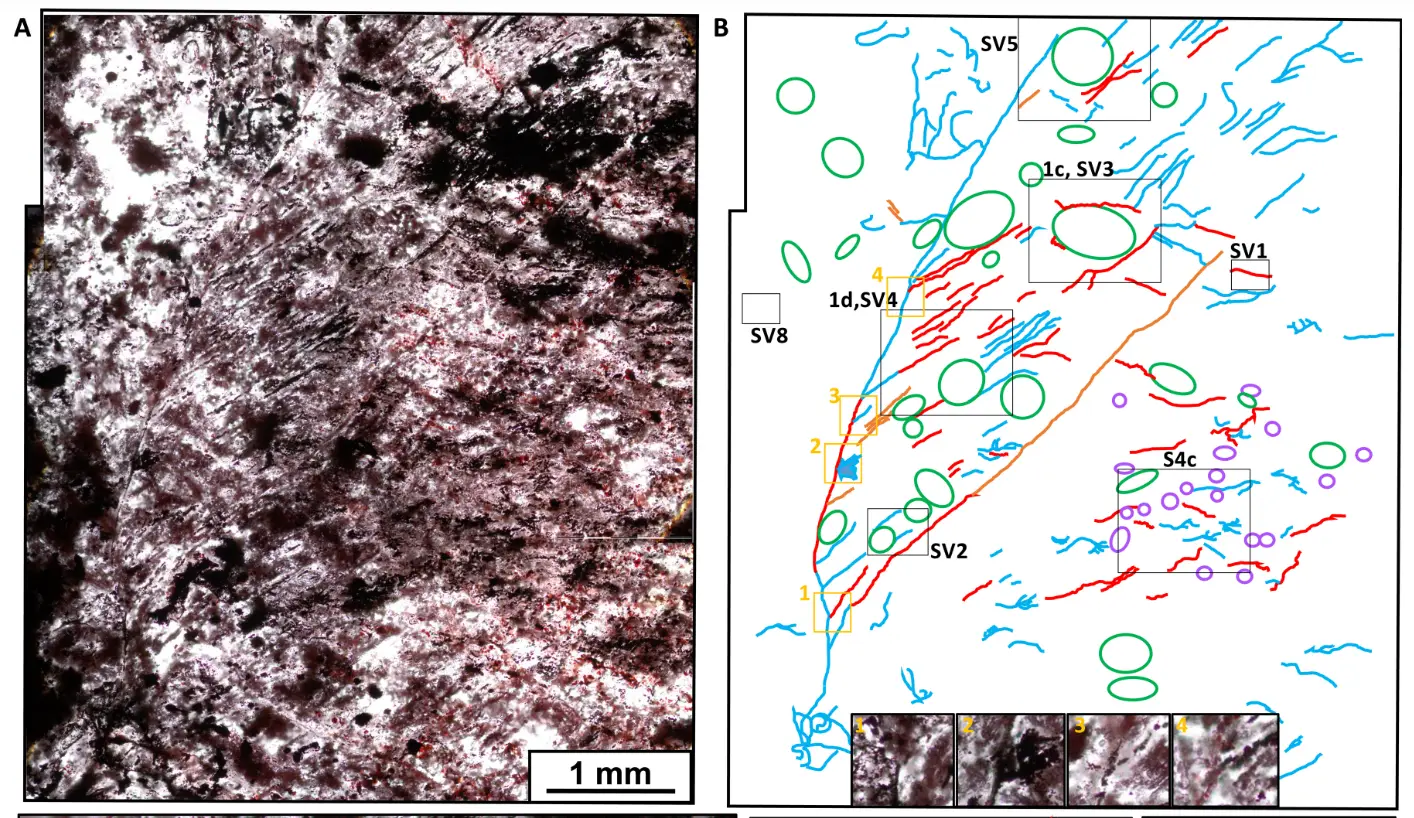
The associate professor, along with researchers at the UCL, published a report in Nature in 2017, which stated the tiny filaments and fibres found in these rocks indicated they could have been made by bacteria.

Advert

They also noted the possibility of earlier life forms than humans initially thought.

While they have suggested the rocks could date back 3.75 billion years ago, there is some suspicion they could be much, much older.

The study questioned whether they could be as old as 4.2 billion years. Now, that would be unbelieveable.

He and his team also published a report in Science Advances this week that said the ‘unprecedented’ findings reveal ‘a diverse microbial ecosystem on the primordial Earth that may be common on other planetary bodies, including Mars’.
Science Advances

While speaking with Vice, Papineau also said: “Overall, it's very exciting because not only do we develop a scientific approach with multiple independent lines of evidence to strengthen the biological origin, we also dismiss the known abiotic reactions.

“These microfossils might actually exist on other ancient planetary surfaces because if the origin of life takes such a short time to develop, and you have this level of complexity, then that brings up a lot of new philosophical questions about the probability that life might have arisen and left these kinds of imprints behind.

“It creates a lot of new opportunities to push back the clock for the origin of life and to search specifically for these kinds of things on other planets.”

The associate professor also disclosed the structure of these fossils supports the possibility of extraterrestrial life and could be used as a gateway into the study of aliens.

“I'm clearly handling some precious stuff,” he said. "They are relics of the very distant past.

"So in a way, it is very humbling because I'm the first human being, the first animal, the first lifeform on this planet, to see these things and to realize what they are.”

Prior to these findings, according to Business Insider, the oldest rocks to date were 3.5 billion fossils found in western Australia.

Featured Image Credit: Dominic Papineau. UCL Mathematical and Physical Sciences/Youtube.

Topics: Science, Aliens, UFO, Space

Charisa Bossinakis
Charisa Bossinakis

Charisa Bossinakis is an Associative Journalist at LADbible. Charisa has worked across various media platforms including, print, digital, radio and podcasting while maintaining the highest regard for quality work and integrity. She also covered everything from breaking news, to pop culture, entertainment and politics and is part of the editorial team for LADbible.

X

@CBossinakis

Recommended reads

Man drinks alcohol and lifts weight for 90 days straight to see how bad it actually is(YouTube/@Clawhammer Supply)How much a pint costs at the 2026 Grand National, get your overdraft readyCarl De Souza/GettyNASA 'anxious' as Artemis crew approach fireball return reaching 23,839 mph speeds(NASA via Getty Images)Extreme physical changes to Artemis II crew's body after 10 days in spaceNASA via Getty Images

Advert

Choose your content:

13 hours ago
14 hours ago
  • Carl De Souza/Getty
    13 hours ago

    How much a pint costs at the 2026 Grand National, get your overdraft ready

    There will be plenty of sore heads on Sunday morning

    News
  • (NASA via Getty Images)
    13 hours ago

    NASA 'anxious' as Artemis crew approach fireball return reaching 23,839 mph speeds

    The crew's return to Earth is considered the 'most dangerous' part of the journey

    News
  • NASA via Getty Images
    14 hours ago

    Extreme physical changes to Artemis II crew's body after 10 days in space

    They're set to be welcomed back to Earth this evening

    News
  • (KENNEDY)
    14 hours ago

    Signs of throat cancer as man's diagnosis linked to oral sex decades ago

    Health experts have linked an increased risk of throat cancer to oral sex

    News
  • Scientists discover 'Super-Earth' planet that could provide answer for finding extraterrestrial life
  • Scientists finally answer one of space’s biggest mysteries which could answer how life on Earth began
  • Harvard scientist says mystery object hurtling towards Earth behaves just like an 'extraterrestrial artefact'
  • People make ‘insane’ realisation about photos of Earth NASA shared