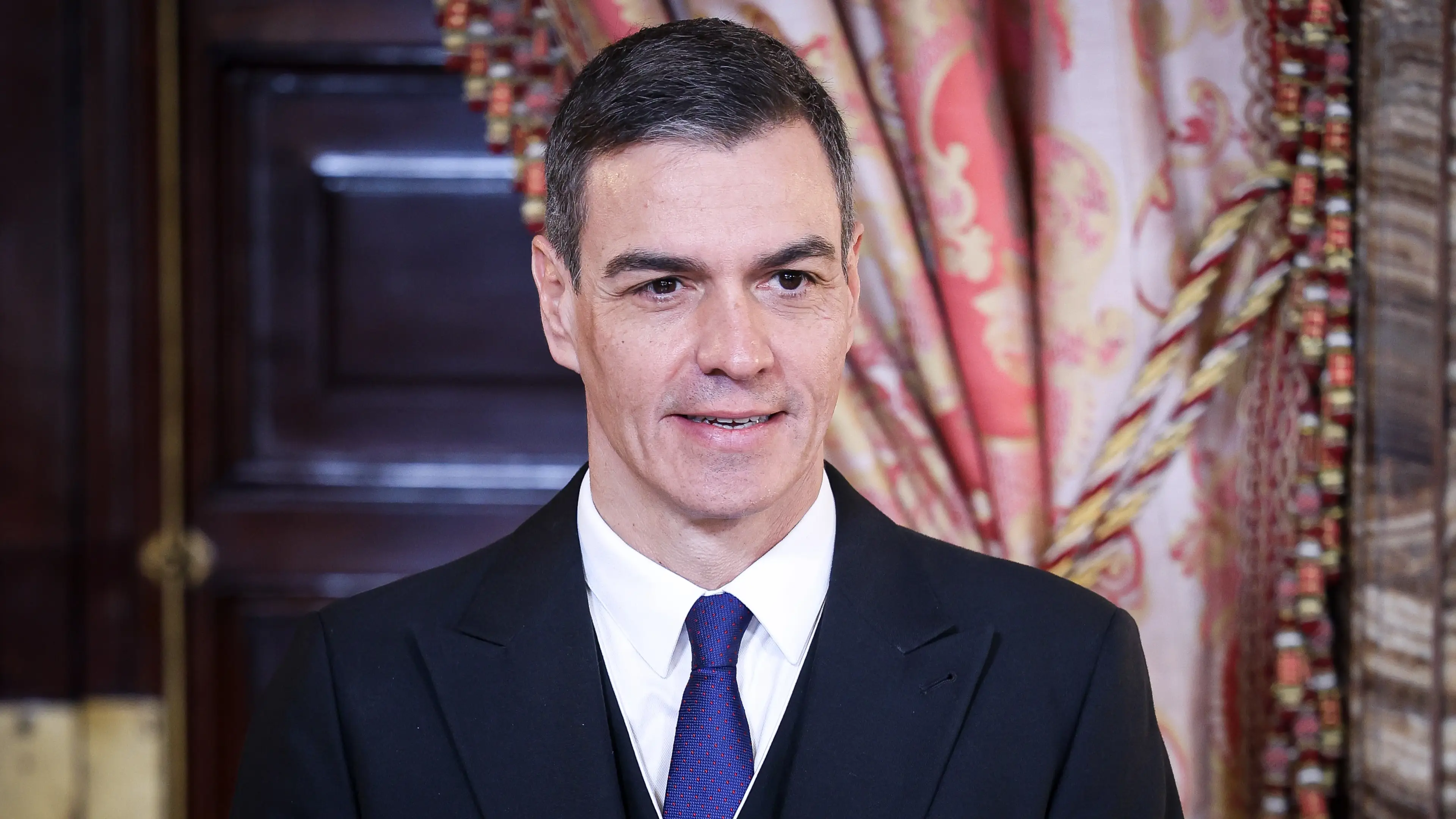

Spanish Prime Minister Pedro Sánchez has hit back at Donald Trump after the US president threatened to end trade with Spain over the country's opposition to the war against Iran.
It comes after Trump was filmed telling German Chancellor Friedrich Merz 'Spain has been terrible,' since the US launched its coordinated military strikes on Iran with Israel.
The 79-year-old went on to say the US planned to 'cut off all trade with Spain,' insisting: "We don't want anything to do with Spain."
Merz later confirmed he had told Trump he would not agree to a separate trade agreement with Germany or all of Europe without Spain.
Advert
Now, Sánchez shared his own thoughts on the situation, restating Spain's opposition to the war and what he described as 'the breakdown of international law'.
'Whether we are in favour of peace and international legality'
Speaking from his home in Madrid, the PM told his country he was assessing economic measures to try and limit the impact the conflict would have on Spanish nationals.
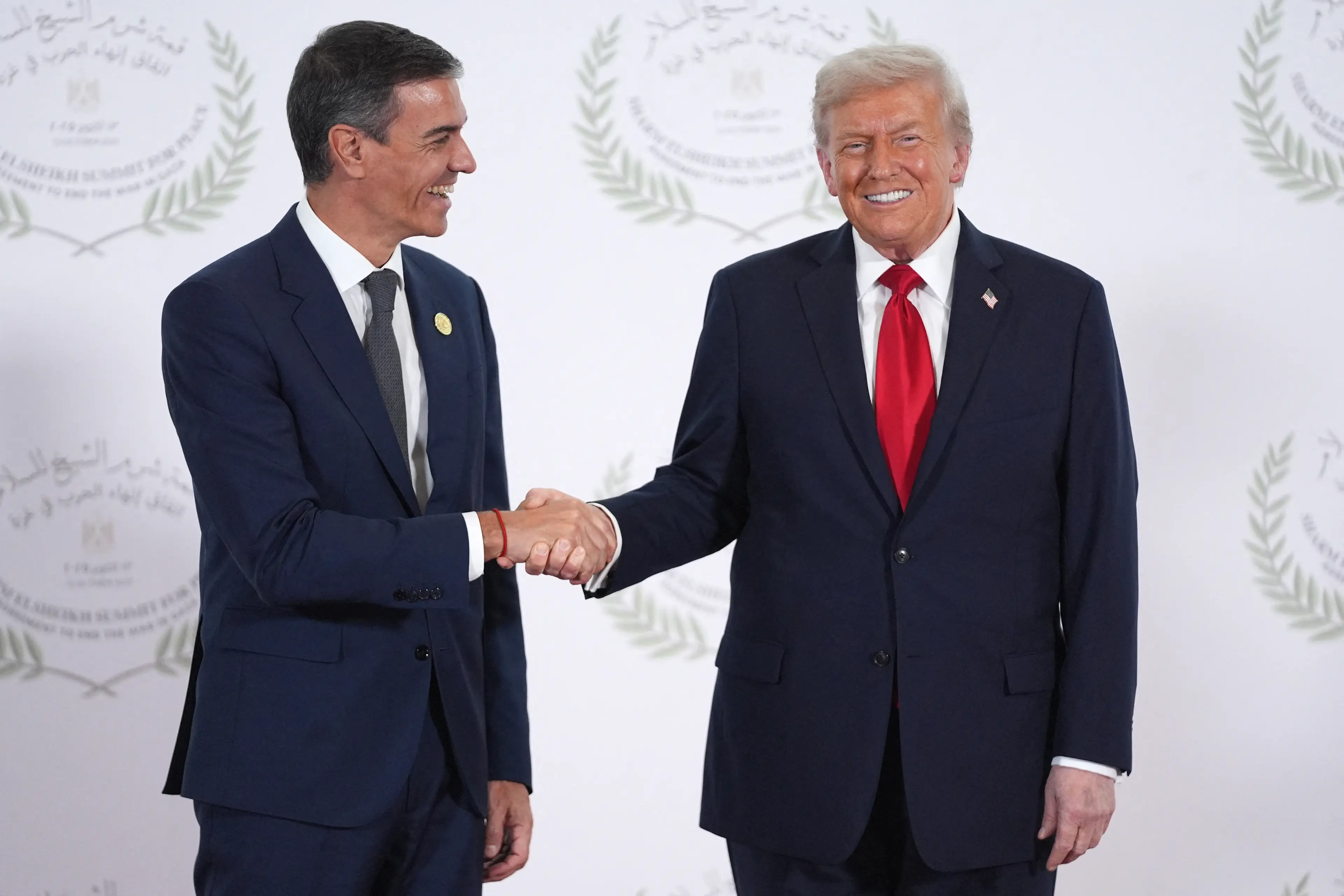
"The question is not if we are on the side of the ayatollahs - nobody is," he said, as per the BBC.
"The question is whether we are in favour of peace and international legality."
Socialist Sánchez went on to say Spain's stance on the US-Iran war is the same as its position on Ukraine and Gaza, with the politician vocalising his criticism of Israel's attacks on Gaza, being one of the only leaders to describe the actions as genocide.
Spain's opinion on Donald Trump
A recent poll by the CIS research institute found that 77 percent of Spanish people had 'bad' or 'very bad' opinions of Trump, suggesting it's not just Sánchez's left-wing supporters who share his views on the matter.
Trump previously accused Spain of being a 'terrible partner' in Nato for declining to increase its defence budget in line with a target of 5 percent of economic output.
However, Spain isn't the only country the president has lashed out at in recent days, after Trump criticised Keir Starmer for turning down his initial request to use the UK's RAF bases to be used in the initial strikes against Iran.
Criticising Starmer's lack of cooperation, Trump told The Sun: "He has not been helpful. I never thought I’d see that. I never thought I’d see that from the UK. We love the UK.
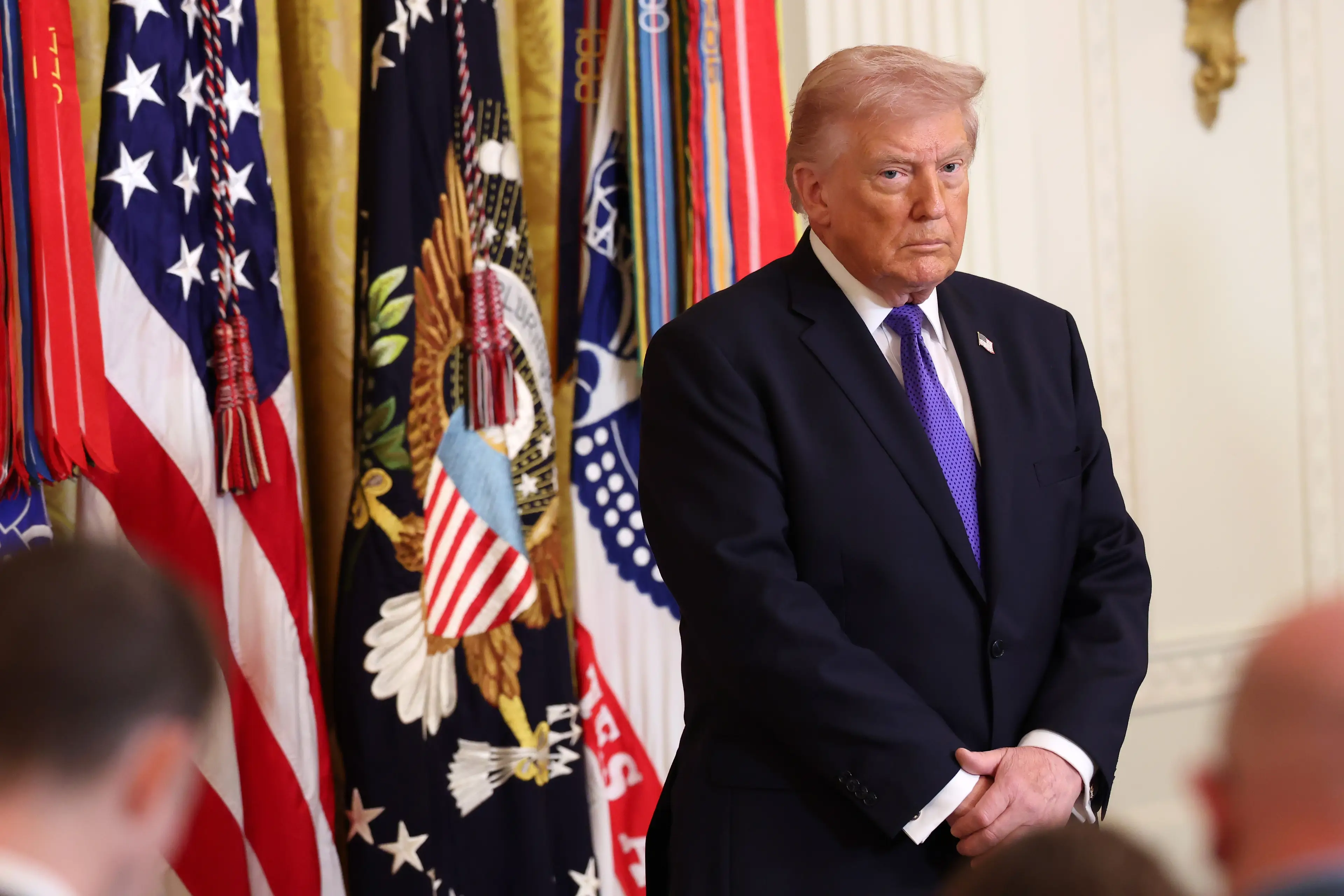
"This was the most solid relationship of all. And now we have very strong relationships with other countries in Europe."
He added: "It’s a different world, actually. It’s just a much different kind of relationship that we’ve had with your country before. It’s very sad to see that the relationship is obviously not what it was."
Iran strikes: what you need to know
Why are the United States and Israel attacking Iran?
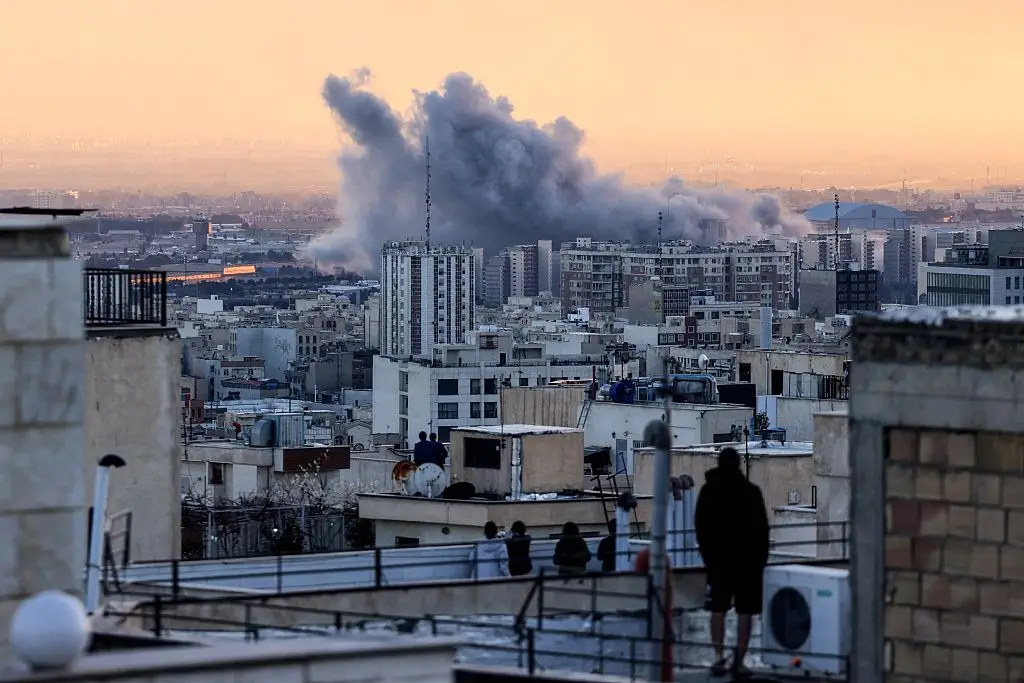
Trump announced on Saturday (28 February) that the US and Israel have started 'major combat operations' in Iran after explosions were heard in multiple cities across the country.
Following a significant buildup of US forces in the region in recent weeks, Trump declared in a video posted on Truth Social that 'we are going to destroy their missiles and raze their missile industry to the ground'.
Alongside thousands of civilian casualties - including at least 165 people, most children, after a reported strike hit a school in Minab - Iran's Supreme Leader Ayatollah Ali Khamenei was confirmed dead following Israeli missile strikes around Tehran.
According to Trump, the aim of this weekend's attacks were to 'ensure that Iran does not obtain a nuclear weapon'.
This has come after weeks of Trump threatening military action in Iran if the Middle Eastern country did not agree to a new deal over its nuclear programme. However, Iran has insisted repeatedly that its nuclear activities are 'entirely peaceful'.
What areas of the Middle East have been affected?
In retaliation to the US and Israeli strikes, Iran has launched strikes of its own on Israel and Gulf Arab countries, which include Qatar, the UAE, Bahrain and Kuwait.
The BBC reports that at least nine people were killed in a strike on the Israeli city of Beit Shemesh, while military and civilian targets - including an American naval base in Bahrain and Dubai's international airport in the United Arab Emirates - were also targeted across the weekend.
Several videos have been posted on social media from tourists and civilians that show the damage inflicted across these areas from missile and drone strikes, including many British citizens who are currently stranded in Dubai.
Meanwhile, after Lebanon's Iranian-backed militia Hezbollah fired missiles at the Israeli city of Haifa, Israel responded with its own strikes.
On Tuesday (3 March), Israel's Defence Minister Israel Katz promised IDF troops on the ground would 'advance and seize additional strategic areas in Lebanon in order to prevent fire on Israeli border communities'.
Is the UK going to war with Iran?
This is a question that has been asked repeatedly since the major combat operation began in Iran, due to the nation being an ally of both the United States and Israel.
Starmer confirmed that British planes were 'in the sky' in the Middle East as part of a defensive operation 'to protect our people, our interests and our allies', and condemned Iran's retaliatory attacks on 'partners across the region'.
On Sunday (1 March), the prime minister also agreed to a request from the US to launch strikes against Iran from British military bases.
While the UK did not participate in the strikes, Starmer released a joint statement with the leaders of France and Germany, calling for Iran to 'refrain from indiscriminate military strikes'.
"Iran can end this now," Starmer said. "They should refrain from further strikes, give up their weapons programme and cease the appalling violence and oppression of the Iranian people – who deserve the right to determine their own future."
However, the Secretary of State for Foreign and Commonwealth Affairs, Yvette Cooper, has said it is 'simply not true' that the UK is being dragged into another Iraq-style conflict in the Middle East.
While addressing a reported drone strike on a RAF base in Cyprus believed to have originated from Iran-backed militia Hezbollah, she told Sky News on Monday, 2 March: "We took a very specific decision not to provide support for strikes that were taking place over this weekend. We have been clear that we believe there should be a diplomatic process, negotiations process."
Topics: US News, Donald Trump
 Emma Rosemurgey