ladbible homepage
ladbible homepage
  • Home
  • News
    • UK
    • US
    • World
    • Ireland
    • Australia
    • Science
    • Crime
    • Weather
  • Entertainment
    • Celebrity
    • TV
    • Film
    • Music
    • Gaming
    • Netflix
    • Disney
  • Sport
  • Technology
  • Travel
  • Lifestyle
  • Money
  • Originals
    • FFS PRODUCTIONS
    • Say Maaate to a Mate
    • Daily Ladness
    • UOKM8?
    • FreeToBe
    • Citizen Reef
  • Videos
  • Advertise
  • Terms
  • Privacy & Cookies
  • License Our Content
  • About Us & Contact
  • Jobs
  • Latest
  • Archive
  • Topics A-Z
  • Authors
Facebook
Instagram
X
Threads
Snapchat
TikTok
YouTube
Submit Your Content Here
  • SPORTbible
  • Tyla
  • GAMINGbible
  • LADbible Group
  • UNILAD
  • FOODbible
  • UNILAD Tech
Final panic-stricken words of Challenger Crew before doomed space shuttle exploded 73 seconds into flight
Home>News>Science
Updated 13:00 22 Apr 2024 GMT+1Published 13:02 22 Apr 2024 GMT+1

Final panic-stricken words of Challenger Crew before doomed space shuttle exploded 73 seconds into flight

The harrowing footage details the last few moments before disaster struck at NASA

Britt Jones

Britt Jones

google discoverFollow us on Google Discover

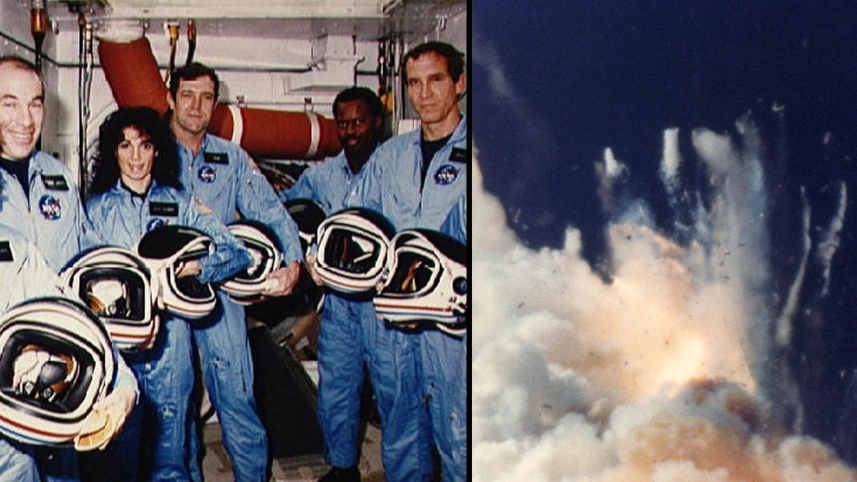
The harrowing case of the Challenger rocket incident is something that haunts many to this day.

In 1986, NASA deployed the Challenger to travel to the Moon in a bid to do more research.

However, it exploded 73 seconds into its flight - in front of the eyes of stunned NASA engineers and millions watching around the world.

All seven passengers on board were killed when the spaceship disintegrated at 46,000 feet above the Atlantic Ocean.

Advert

Those on board were astronauts Francis R. Scobee, Michael J. Smith, Ronald E. McNair, Ellison S. Onizuka, Judith A. Resnik, Gregory B. Jarvis and teacher S. Christa McAuliffe who all perished.

Known as one of the worst NASA accidents, it was found to have been due to a mechanical fault, specifically the failure of two rubber O-rings to seal a joint between the two lower segments of the right-hand solid rocket booster.
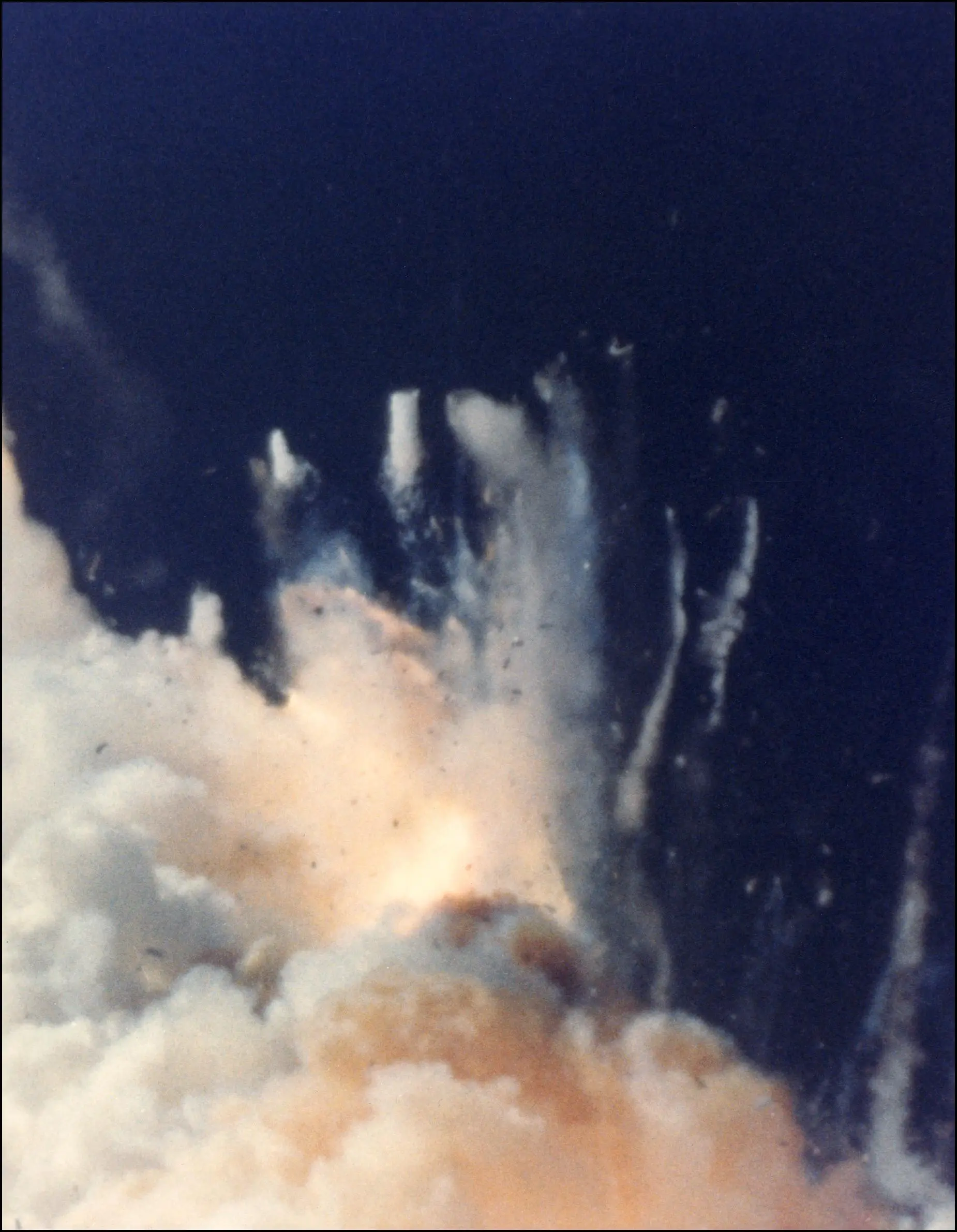
The Challenger is one of the most awful NASA accidents. NASA/AFP via Getty Images

Due to the severe cold temperatures, it opened a path for hot exhaust gas to escape from inside the booster during the shuttle's ascent.

This led to flames emerging from the hole which spread to a tank carrying liquid hydrogen and liquid oxygen which then exploded.

It was a major blow to NASA, who had been criticised for trying to accomplish too much with too little money, and also to the friends and families of those who died.


But there had been a lot of speculation as to whether the crew realised what was happening in the moments leading up to the explosion.

The truth? They didn’t until it was too late.

The final panic-stricken words from those inside of the shuttle was captured by the operational recorder which NASA shared.

Beginning with minutes before takeoff, the crew can be heard laughing and completing their routine checks to ensure that everything was reading as it should.
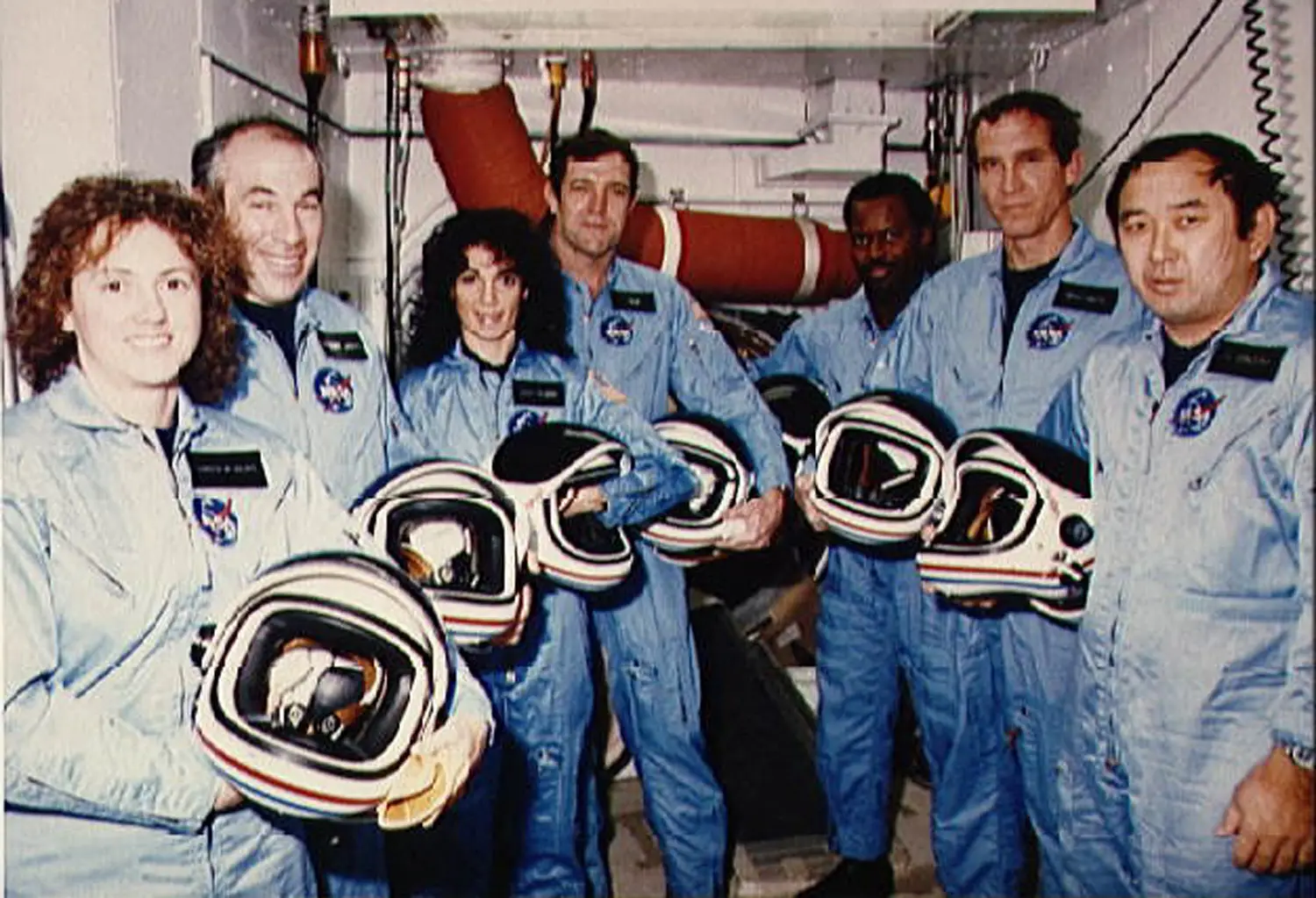
All seven on board died. NASA/AFP via Getty Images

Running through the protocols and how to communicate stats, the crew seemed to be in their element until the final countdown began and then they were excited.

One person could be heard saying: “Go you mother.”

With one minute up in the air, they throttled up twice and another person commented: “Feel that mother go.”

However, seconds later it would be over.

Little did they know that something was wrong all along and was slowly making its way to flammable liquids.

Unfortunately, they realised at the last second when one person could be heard saying ‘uh oh’ before all data was lost to the operation room and the Challenger exploded into pieces.

The shuttle containing the crew remained intact and careened into the ocean, however due to the rapid pressure change and the crew not wearing pressure suits, it’s likely that they died before the impact of hitting the water because of the lack of oxygen.

Featured Image Credit: NASA/AFP via Getty Images

Topics: NASA, Space, Technology, Science

Britt Jones
Britt Jones

Recommended reads

How Madeleine McCann's parents became suspects in her disappearanceLEON NEAL/AFP/GettyImagesWoman with vagina in world's top 1% is spending $2 million a year in extreme human experimentKate ToloJet2 joins Ryanair in summer holiday update as CEO gives fuel latestFinnbarr Webster/Getty ImagesTwo 'people hunters' under investigation over alleged sniper safaris that killed women and childrenMIKE PERSSON / AFP via Getty Images

Advert

Choose your content:

an hour ago
2 hours ago
5 hours ago
  • MIKE PERSSON / AFP via Getty Images
    an hour ago

    Two 'people hunters' under investigation over alleged sniper safaris that killed women and children

    Several journalists have now dropped bombshell claims about the alleged war crimes

    News
  • Sussex Police
    an hour ago

    Father pays heartbreaking tribute as three sisters identified in Brighton beach tragedy

    The women's bodies were recovered from the water last week

    News

    breaking

  • Supplied
    2 hours ago

    Woman with rare liver cancer forced to go to Turkey for transplant as she 'doesn't meet NHS criteria'

    Florence Moffat-Charles thought she was just suffering from a busy work life but tests showed she needed urgent care

    News
  • (Getty Stock Images)
    5 hours ago

    TSA rule change lets you bring cannabis on a plane after Trump reclassifies plant

    Before everyone gets too excited, there is a catch...

    News
  • Astronaut realised big 'lie' after looking down at the Earth from space
  • Last known image of astronauts taken moments before fatal incident that saw all crew lose their lives
  • Experts had one question after cosmonaut fell from space leaving chilling last words in final transmission
  • Cosmonaut's chilling last words in final transmission as he fell from space