ladbible homepage
ladbible homepage
  • Home
  • News
    • UK
    • US
    • World
    • Ireland
    • Australia
    • Science
    • Crime
    • Weather
  • Entertainment
    • Celebrity
    • TV
    • Film
    • Music
    • Gaming
    • Netflix
    • Disney
  • Sport
  • Technology
  • Travel
  • Lifestyle
  • Money
  • Originals
    • FFS PRODUCTIONS
    • Say Maaate to a Mate
    • Daily Ladness
    • UOKM8?
    • FreeToBe
    • Citizen Reef
  • Videos
  • Advertise
  • Terms
  • Privacy & Cookies
  • License Our Content
  • About Us & Contact
  • Jobs
  • Latest
  • Archive
  • Topics A-Z
  • Authors
Facebook
Instagram
X
Threads
Snapchat
TikTok
YouTube
Submit Your Content Here
  • GAMINGbible
  • LADbible Group
  • UNILAD
  • SPORTbible
  • Tyla
  • FOODbible
  • UNILAD Tech
Stark reality of Kessler syndrome's danger to humanity explained by scientists and it is terrifying
Home>News>Science
Published 16:21 27 Dec 2024 GMT

Stark reality of Kessler syndrome's danger to humanity explained by scientists and it is terrifying

It's a terrifying concept and one that is slowly becoming more and more real

Tom Earnshaw

Tom Earnshaw

google discoverFollow us on Google Discover

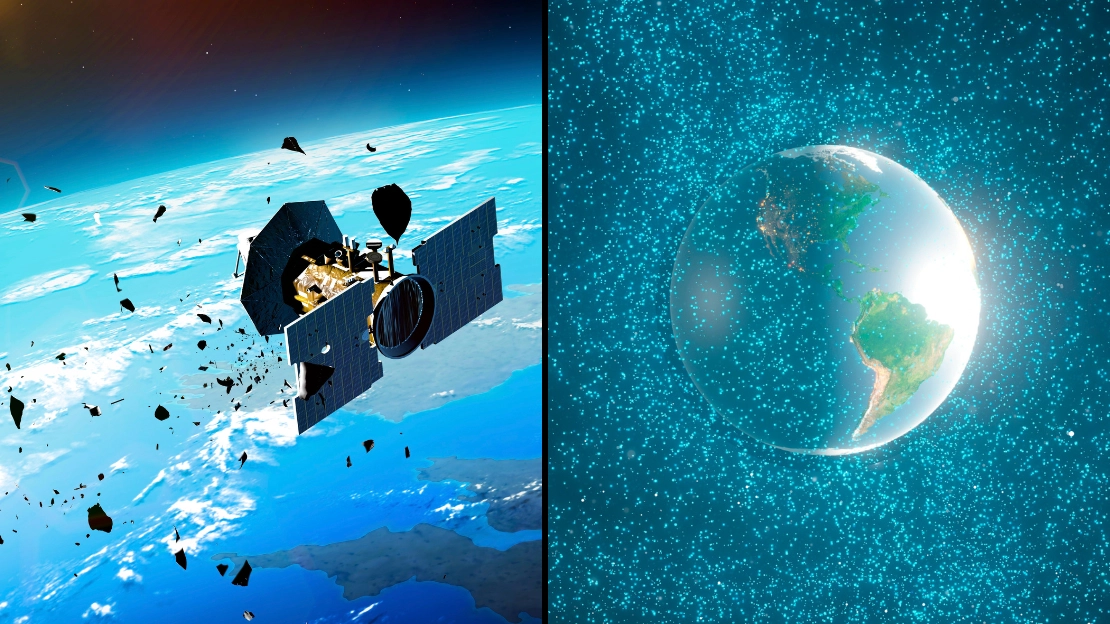
The dangers of the Kessler syndrome to life on Earth as we know it has been laid bare in a fresh warning from academics speaking about the dangers of it should it come true.

Dating back to the 1970s, the Kessler syndrome was first thought up as a scientific hypothesis. But like a lot of science, it was based on probability should certain things happen.

And in the case of the Kessler syndrome, it banked on humanity becoming more and more reliant on objects orbiting Earth - and the problems associated with that.

Fast-forward to 2024 and we've being given a fresh warning about how real a threat this now is to our way of life down on Earth's surface.

Advert

What is Kessler syndrome?

Theorised by NASA scientists Donald Kessler and Burton Cour-Palais back in 1978, the Kessler syndrome warns that objects orbiting Earth in close proximity to the planet will become so crowded that a chain reaction of collisions could begin.

And from there, it might not stop, destroying satellites essential to maintaining humanity as we know it from crop production and internet connections to keeping international travel going and phone calls being made.

In the worst case scenario, the area of space described as low Earth orbit (LEO) will then become uninhabitable by new satellites due to the rings of debris whizzing around the planet.
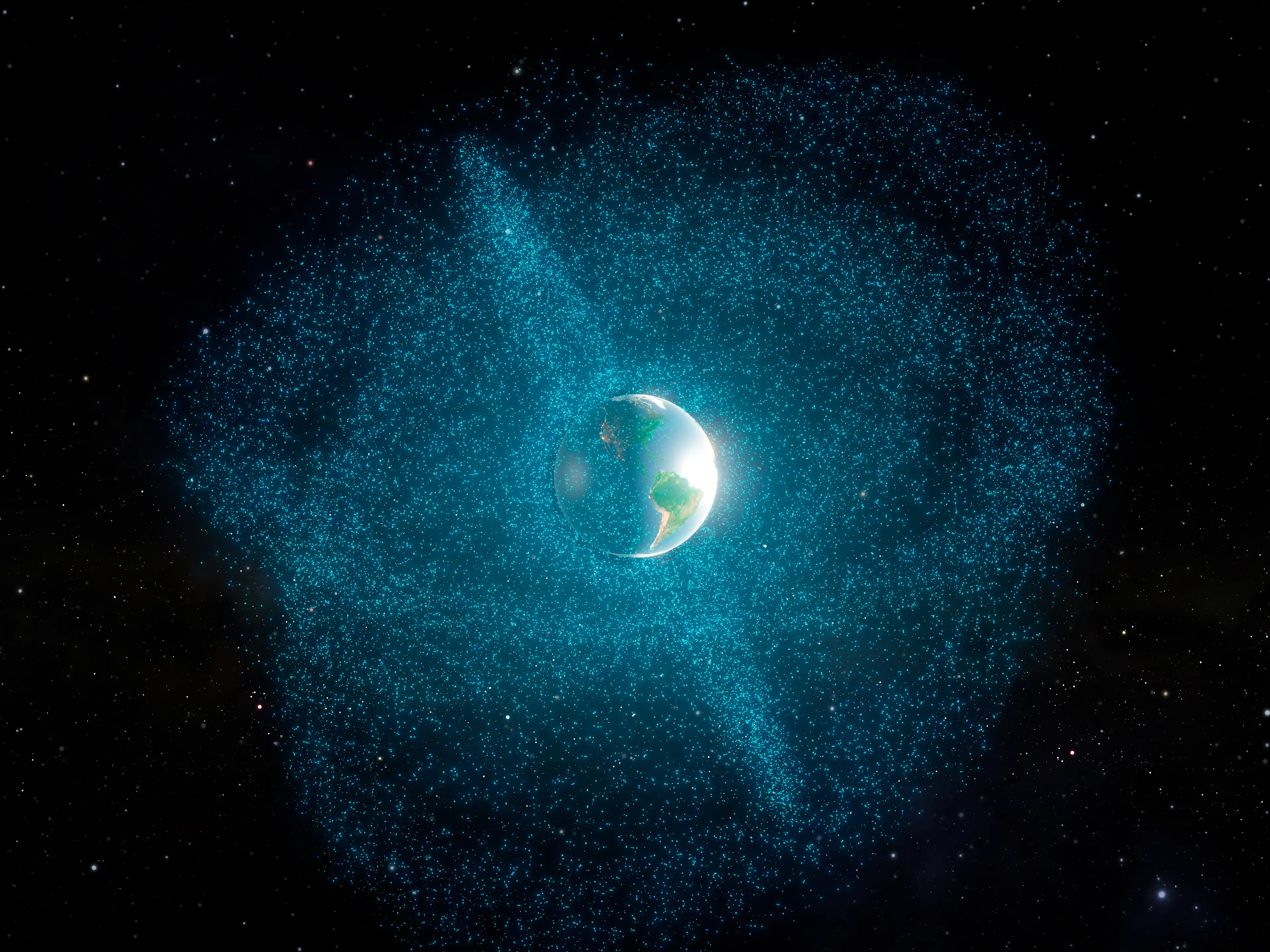
Illustration of a very busy orbiting area around Earth (Getty Stock Images)

Kessler syndrome in reality

The area around Earth is set to only get more crowded if the likes of billionaire Elon Musk get their way.

Currently, the European Space Agency estimates there are more than 10,000 satellites orbiting the planet.

Of these, 6,800 are part of the Starlink broadband network, operated by Musk's company SpaceX.

He plans to increase the number of Starlink satellites to 40,000. And given there is already 40,500 pieces of space debris floating around the planet, that is going to make life a lot more crowded.
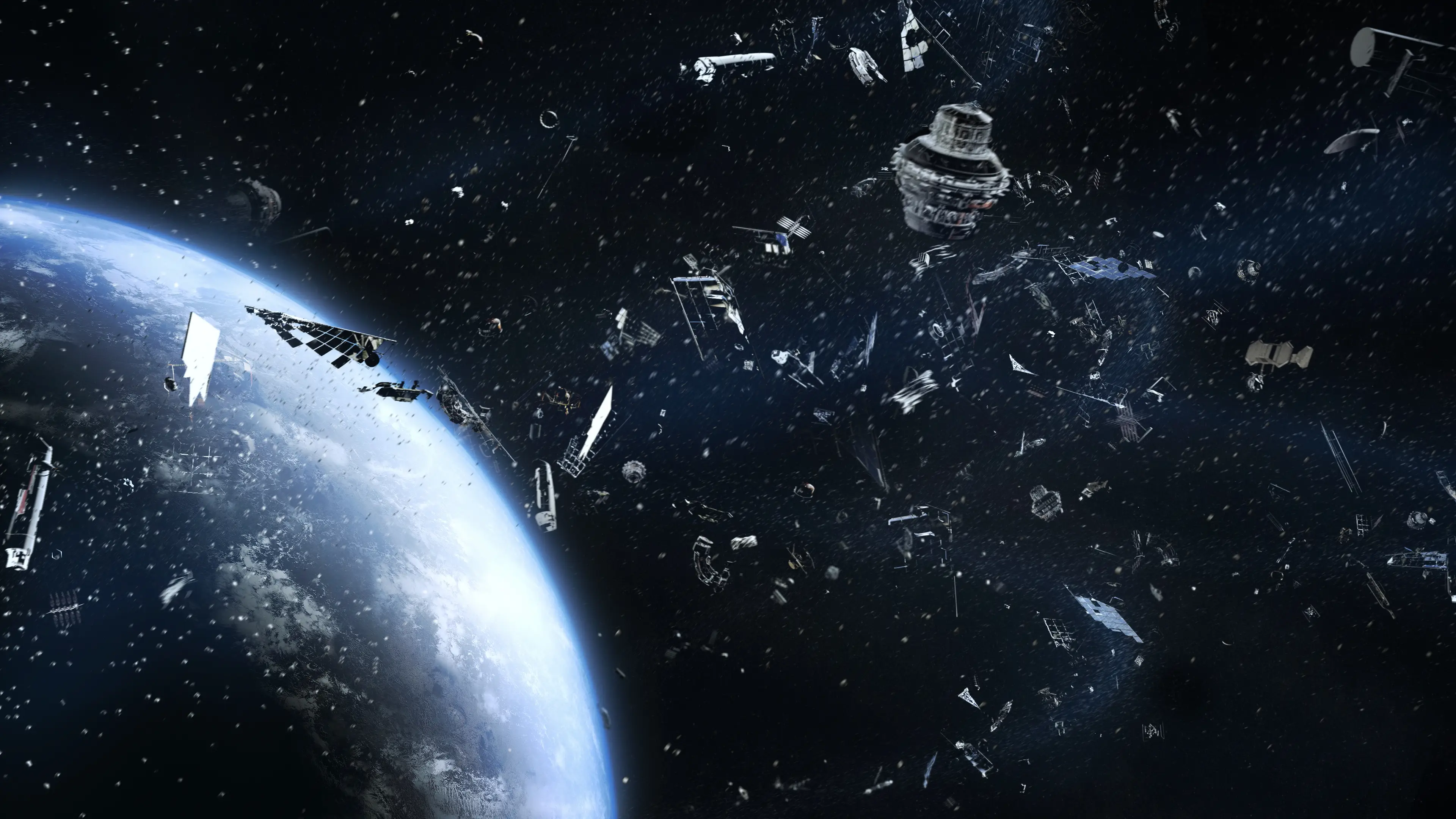
Thousands of bits of broken up satellite orbit Earth (Getty Stock Images)

Stark reality explained

As it stands, objects in low orbit of Earth already record around 1,000 collision warnings every single day. That's according to Thomas Berger, director of University of Colorado's Space Weather Technology Research and Education Center.

Objects larger than around four inches, or 10 centimetres, are tracked and form part of the warnings issued on a daily basis.

Obviously, due to technology limitations and the sheer amount of debris, it's impossible to track everything. Especially when the likes of Russia, in 2021, launched a missile at one of its own satellites as part of a test - creating more than 1,500 pieces of debris (and that's just the traceable bits).
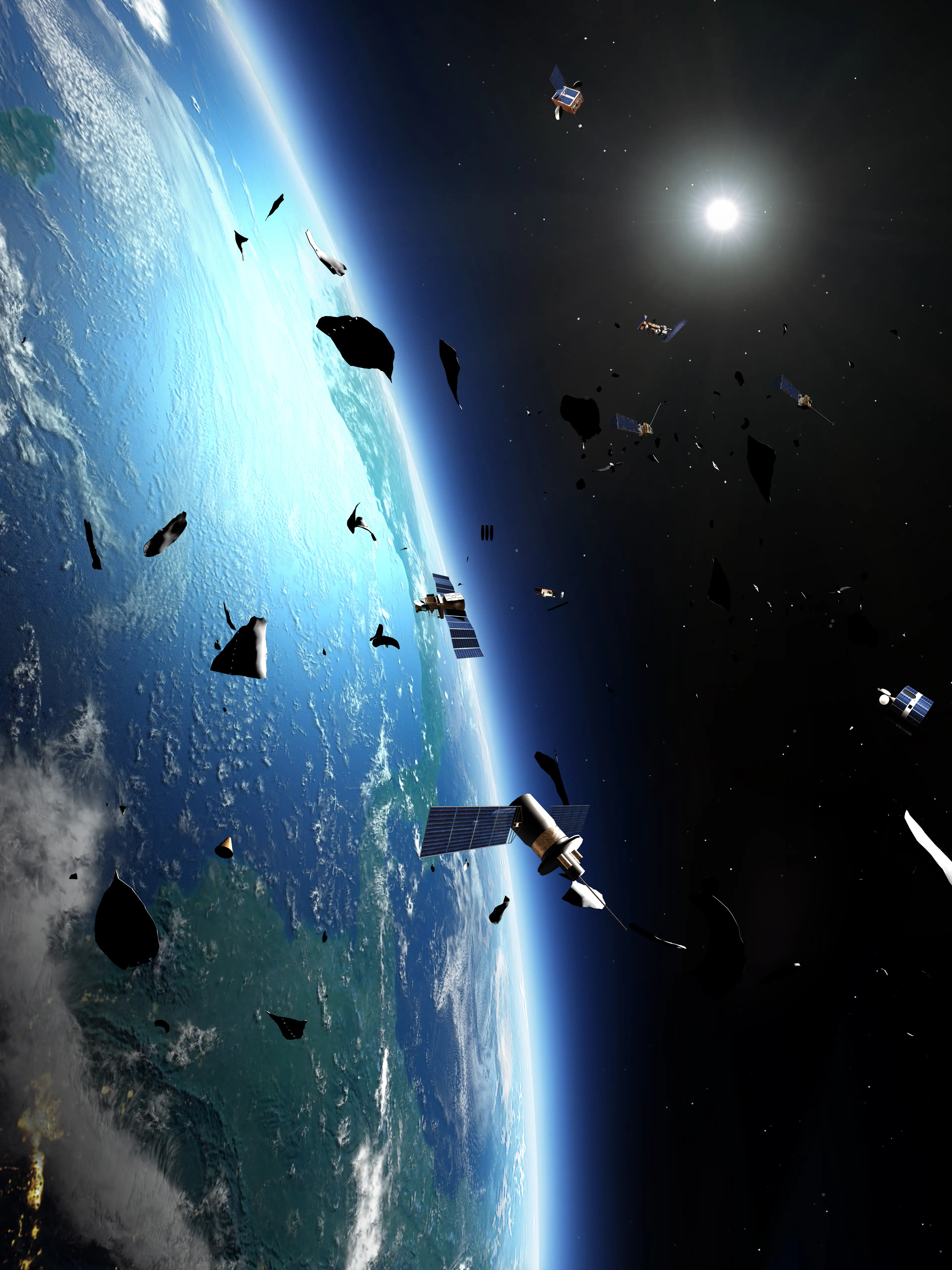
Space junk could end humanity as we know it (Getty Stock Images)

Will the Kessler syndrome really happen?

Dr. Nilton Renno, a professor of climate and space sciences and engineering at the University of Michigan, said: "The analogy that I like to think about space debris is plastic in the oceans.

"We used to think that the oceans are infinite, and we throw in trash and plastic, and now we realise - no, those are finite resources. And we are causing huge damage if we are not careful about what we do."

Carolin Frueh, an associate professor of aeronautics and astronautics at Purdue University in Indiana, said she thinks the concept of the Kessler syndrome is no longer useful but that it works as a moving concept that the unregulated approach to orbit is a problem.

She said she was pessimistic that humanity 'will act timely enough to not have economic damage in the process'.

Featured Image Credit: Getty Stock Images

Topics: Space, World News, Technology, US News, Science, NASA

Tom Earnshaw
Tom Earnshaw

Tom joined LADbible Group in 2024, currently working as SEO Lead across all brands including LADbible, UNILAD, SPORTbible, Tyla, UNILAD Tech, and GAMINGbible. He moved to the company from Reach plc where he enjoyed spells as a content editor and senior reporter for one of the country's most-read local news brands, LancsLive. When he's not in work, Tom spends his adult life as a suffering Manchester United supporter after a childhood filled with trebles and Premier League titles. You can't have it all forever, I suppose.

X

@TREarnshaw

Recommended reads

Wimbledon winner Jannik Sinner loses half of his prize money after beating Alexander ZverevVisionhaus/Getty ImagesExperts warn parts of the UK are at 'exceptional' risk of wildfires as the heatwave continuesBrook Mitchell/Getty ImagesNew study reveals creatine has unexpected positive side effect on healthGetty Stock PhotoMan shares update after £20,000 leg lengthening surgery that 'snapped' his bonedSWNS

Advert

Choose your content:

2 hours ago
6 hours ago
7 hours ago
  • Visionhaus/Getty Images
    2 hours ago

    Wimbledon winner Jannik Sinner loses half of his prize money after beating Alexander Zverev

    Jannik Sinner has won the Wimbledon male's final but won't be keeping all his millions in winnings

    News
  • Brook Mitchell/Getty Images
    6 hours ago

    Experts warn parts of the UK are at 'exceptional' risk of wildfires as the heatwave continues

    Firefighters are currently tackling a blaze in North Wales as experts warn of a greater risk in the coming days

    News
  • Getty Stock Photo
    6 hours ago

    New study reveals creatine has unexpected positive side effect on health

    Further tests would be needed but it could supplement the existing treatment

    News
  • Justin Setterfield/Getty Images
    7 hours ago

    Eye-watering net worths of England squad WAGs as team head to semi-finals

    Behind every great man...

    News
  • NASA boss admits agency has captured images of UFOs saying 'we don't know what it is'
  • NASA reveals the Earth is getting darker and it could have a major impact on humanity
  • Astronaut who spent 178 days in space reveals what it taught him about humanity
  • NASA satellite is crashing back to Earth today with potential threat to humanity