ladbible homepage
ladbible homepage
  • Home
  • News
    • UK
    • US
    • World
    • Ireland
    • Australia
    • Science
    • Crime
    • Weather
  • Entertainment
    • Celebrity
    • TV
    • Film
    • Music
    • Gaming
    • Netflix
    • Disney
  • Sport
  • Technology
  • Travel
  • Lifestyle
  • Money
  • Originals
    • FFS PRODUCTIONS
    • Say Maaate to a Mate
    • Daily Ladness
    • UOKM8?
    • FreeToBe
    • Citizen Reef
  • Advertise
  • Terms
  • Privacy & Cookies
  • License Our Content
  • About Us & Contact
  • Jobs
  • Latest
  • Archive
  • Topics A-Z
  • Authors
Facebook
Instagram
X
Threads
Snapchat
TikTok
YouTube
Submit Your Content Here
  • SPORTbible
  • Tyla
  • GAMINGbible
  • LADbible Group
  • UNILAD
  • FOODbible
  • UNILAD Tech
Security expert explains how to prevent your ChatGPT chats from appearing on Google
Home>News>Technology
Published 15:26 7 Aug 2025 GMT+1

Security expert explains how to prevent your ChatGPT chats from appearing on Google

Cyber security girl Caitlin Sarian has shared exactly how to check whether your private Chat GPT conversations are being shared

Emma Rosemurgey

Emma Rosemurgey

google discoverFollow us on Google Discover

If you think your conversations with ChatGPT are private, think again.

Not only are your chats used to train the AI, your conversations could now be showing up on Google search too.

This could be anywhere from a little bit embarrassing to an absolute disaster, depending on what you actually use the chatbot for, but fortunately it can be prevented.

A cyber security expert has revealed how to check whether your chat log is available to every Tom, Dick and Harry, and what you can do about it if it is.

Advert

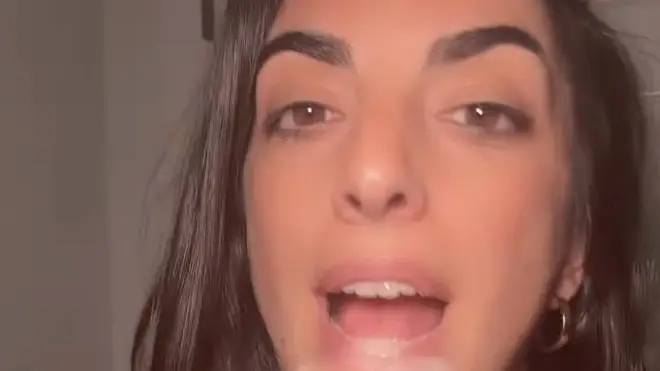
Caitlin Sarian, who posts a wealth of information about how to stay safe on the internet from her handle @cybersecuritygirl, says the first thing you need to do is change your settings within ChatGPT.

"The first and the easiest is to turn off share links in ChatGPT. Go to settings, then data controls then chat history and training and disable sharing to prevent chats from being indexed," she explained in a recent Instagram video.

The second thing, Caitlin explained, is 'just to manually delete the sensitive chats, so you can hover over any old chat and click the trash icon'.

But, if you want to check whether any of your chats have already made it into the public domain, there's one thing you can do to see what's already out there.

"Google your name, plus this ["site:chat.openai.com"]," she explained. "This checks if any of your chats are being indexed right now and if they show up, delete those links and request removal from Google search."

Your privacy could be being compromised (Thomas Fuller/SOPA Images/LightRocket via Getty Images)

Caitlin concluded her video by issuing a stark warning to anyone who puts sensitive information into AI chatbots like ChatGPT.

"This is your reminder that anything you type into AI can be stored," she said, "so treat it like you would a public forum even if it feels private."

Meanwhile, the CEO of OpenAI, the company behind ChatGPT, has called for greater legal protections around chat logs.

Sam Altman said that ChatGPT conversations should be given the same privilege as conversations between patient and therapist, from a legal perspective, given the increasing number of young people turning to the software for personal support.

"So, if you go talk to ChatGPT about your most sensitive stuff and then there's like a lawsuit or whatever, we could be required to produce that, and I think that's very screwed up," he told podcast host Theo Von in an episode of This Past Weekend.

"Right now, if you talk to a therapist or a lawyer or a doctor about those problems, there's like legal privilege for it — there's doctor-patient confidentiality, there's legal confidentiality. We haven't figured that out yet for when you talk to ChatGPT."

Featured Image Credit: @cybersecuritygirl/Instagram

Topics: AI, Artificial Intelligence, Technology, Google

Emma Rosemurgey
Emma Rosemurgey

Emma is an NCTJ accredited journalist who recently rejoined LADbible as a Trends Writer. She previously worked on Tyla and UNILAD, before going on to work at the Mirror Online. Contact her via [email protected]

Recommended reads

Kylie Jenner says son was 'falling out' of her vagina as she details horror pregnancy experienceInstagram/TherapussWoman with boobs so big she can’t even play with her son denied surgery by NHSKennedy News and MediaNavy SEAL who killed Bin Laden admits to secret part of mission 'President Obama didn’t know about'SuppliedDoctor explains why cancer symptoms only appear '10 to 15 years' after it can start in your bodyYouTube/Doctor Alex

Advert

Choose your content:

an hour ago
2 hours ago
4 hours ago
  • Kennedy News and Media
    an hour ago

    Woman with boobs so big she can’t even play with her son denied surgery by NHS

    Charlotte Innes has been rejected for reduction surgery five times

    News
  • Supplied
    2 hours ago

    Navy SEAL who killed Bin Laden admits to secret part of mission 'President Obama didn’t know about'

    Robert O'Neill spoke to LADbible about how the infamous operation came together

    News
  • YouTube/Doctor Alex
    2 hours ago

    Doctor explains why cancer symptoms only appear '10 to 15 years' after it can start in your body

    Dr Alex Wibberley said cancer can cause major changes in the body before you feel anything

    News
  • PA
    4 hours ago

    Coastguard shares 'tragic theory' as three women pulled out of sea in Brighton

    Police were able to identify the three women earlier today

    News
  • Woman breaks up with boyfriend after discovering his ChatGPT message history
  • Security expert issues chilling warning over how AI could be used to attack UK and explains the 'most difficult problem'
  • Head of Google's AI explains when we're going to see human-level AI but issues worrying warning
  • ChatGPT tells user how to 'blow up a sports venue' in shocking experiment