ladbible homepage
ladbible homepage
  • Home
  • News
    • UK
    • US
    • World
    • Ireland
    • Australia
    • Science
    • Crime
    • Weather
  • Entertainment
    • Celebrity
    • TV
    • Film
    • Music
    • Gaming
    • Netflix
    • Disney
  • Sport
  • Technology
  • Travel
  • Lifestyle
  • Money
  • Originals
    • FFS PRODUCTIONS
    • Say Maaate to a Mate
    • Daily Ladness
    • UOKM8?
    • FreeToBe
    • Citizen Reef
  • Videos
  • Advertise
  • Terms
  • Privacy & Cookies
  • License Our Content
  • About Us & Contact
  • Jobs
  • Latest
  • Archive
  • Topics A-Z
  • Authors
Facebook
Instagram
X
Threads
Snapchat
TikTok
YouTube
Submit Your Content Here
  • GAMINGbible
  • LADbible Group
  • UNILAD
  • SPORTbible
  • Tyla
  • FOODbible
  • UNILAD Tech
How to spot shooting stars tonight as meteor shower is set to reach its peak
Home>News>UK News
Published 14:45 17 Nov 2024 GMT

How to spot shooting stars tonight as meteor shower is set to reach its peak

Here is how you can maximise your chances of seeing a shooting star

Brenna Cooper

Brenna Cooper

google discoverFollow us on Google Discover

Here is everything you need to know about an upcoming meteor shower which means shooting stars could be visible across UK skies tonight.

Brits it's time to grab your coats and head to somewhere with minimal light pollution as we're set to witness another celestial event.

And no, we're not talking about the Northern Lights for once.

According to current forecasts, tonight (17 November) is when the Leonid meteor shower will reach it's peak.

Advert
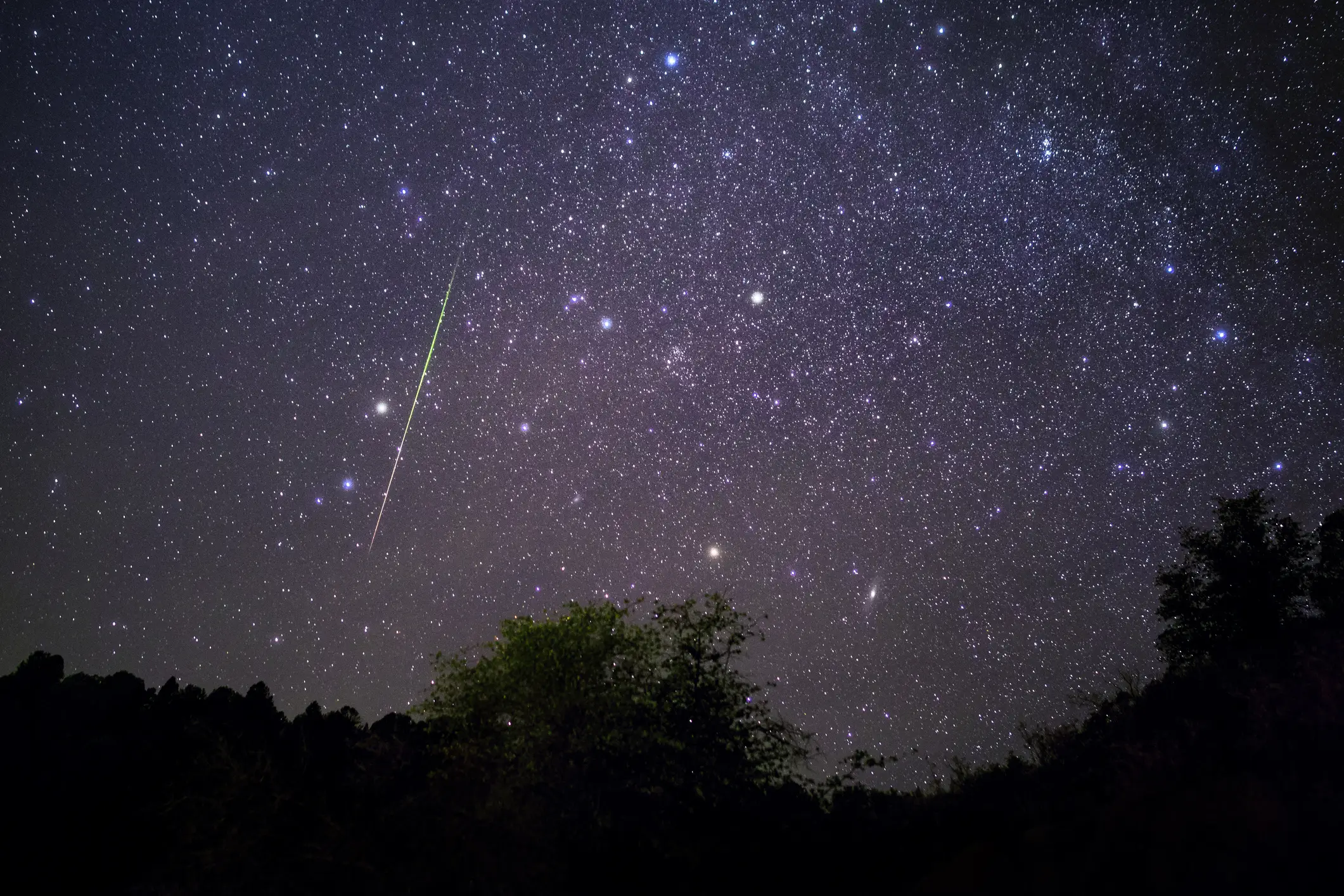
Listen up stargazers, as tonight you have to chance to see a meteor shower (Getty Stock Images)

What is the Leonid meteor shower?

Also referred to as shooting stars, meteor showers occur when debris left behind by comets shoot through the Earth's atmosphere at rough speeds of 70 kilometres per second. The speed causes the debris to vaporise, which creates the familiar streaks of light in the sky.

The Leonid meteors originate from the comet 55P/Tempel-Tuttle and typically peak around mid-November every year.

Every 33 years, these comets will produce major storms where hundreds - and possibly even thousands - of meteors can be seen in the night sky. The last storm occurred in 2002, while the most famous storm is said to have seen around 100,000 meteors per hour shoot through the sky back in 1833.

Although tonight's storm is very unlikely to be as impressive as this, it's still something worth keeping an eye out for.

How can I see the Leonid meteor shower?

When it comes to maximising your chances of seeing the Leonids, advice from the Royal Museums Greenwich advises that you find a find a spot away from light pollution, ideally a place in which you can observe a large amount of the night sky with your feet pointing eastward.
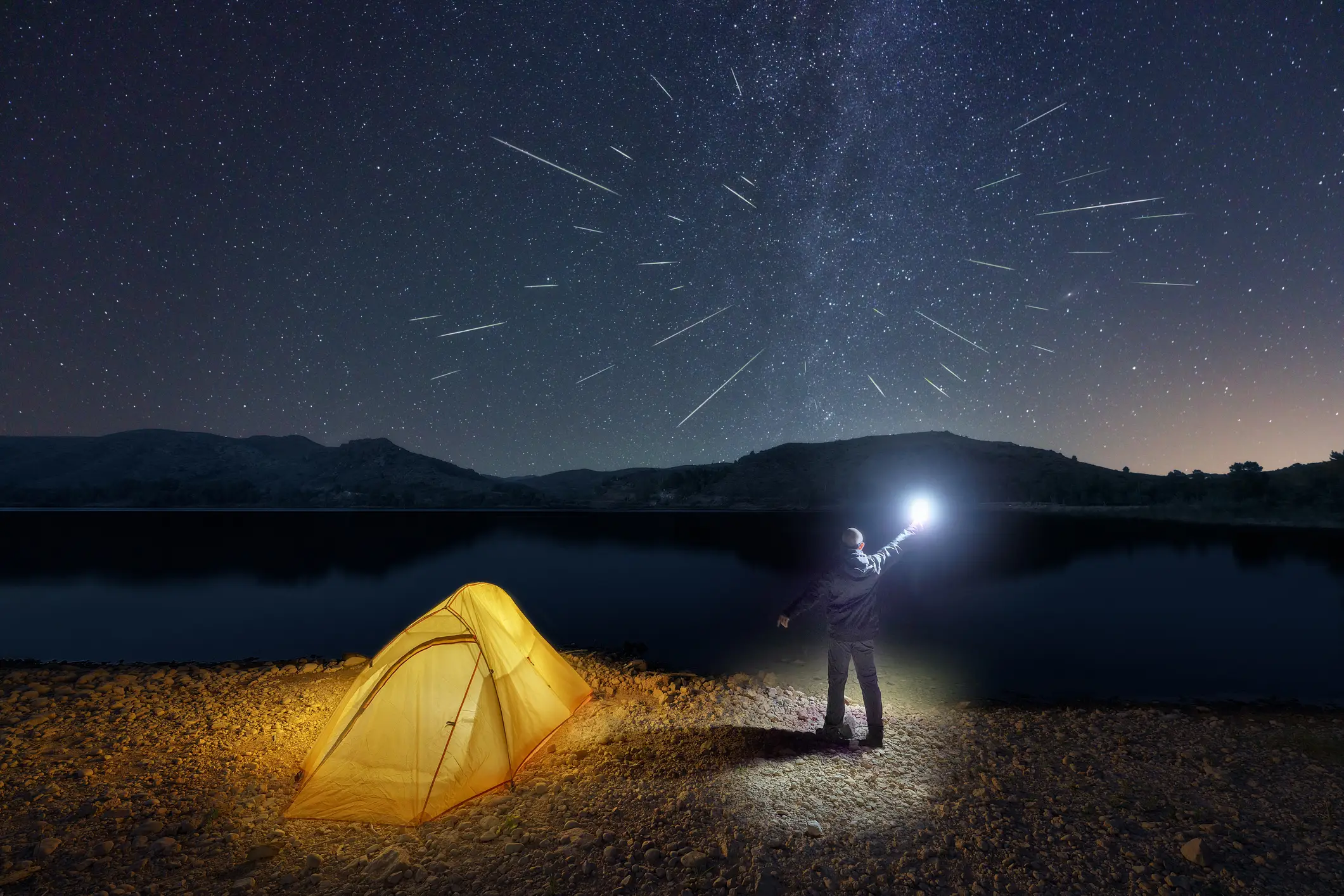
Get ready to be patient if you want to see meteors tonight (Getty Stock Images)

The advice adds that you should give your eyes around 30 minutes to adjust to the dark, which will maximise your chances of seeing the meteors shooting across the sky.

It's expected that around 10 to 15 meteors will be visible above the sky, which means you may have to be patient and not expect to be dazzled in your first few minutes of staring up at the sky.

For anyone feeling bold enough to head out into the wilderness in search of the meteors, NASA suggests bringing a sleeping bag, blanket or lawn chair with you.

It's also important to note the meteor shower coincides with a full moon, which will impact your viewing capabilities. Make sure you also double check the weather before heading outside as well, as a cloudy night will also put a dampener on your viewing experience.

Featured Image Credit: (Getty Stock Images)

Topics: Space, UK News, Weather

Brenna Cooper
Brenna Cooper

Brenna Cooper is a journalist at LADbible. She graduated from the University of Sheffield with a degree in History, followed by an NCTJ accredited masters in Journalism. She began her career as a freelance writer for Digital Spy, where she wrote about all things TV, film and showbiz. Her favourite topics to cover are music, travel and any bizarre pop culture.

X

@_brencoco

Recommended reads

Jon Bernthal's 11-year-old daughter's pay cheque for The Punisher has been revealedJamie McCarthy/Getty ImagesDoctor explains why everyone should be drinking milk in heatwave as temperatures soar above 30 degreesGetty Stock PhotoGemma Collins shows off incredible body transformation after shedding 3.5 stone with weight loss jabsGemma Collins/InstagramKiller sends harrowing message to victims' family after murdering mechanic over $500Fox 26 Houston

Advert

Choose your content:

12 hours ago
13 hours ago
14 hours ago
  • Getty Stock Photo
    12 hours ago

    Doctor explains why everyone should be drinking milk in heatwave as temperatures soar above 30 degrees

    Temperatures are soaring to 33 degrees celsius in the UK this week

    News
  • Fox 26 Houston
    12 hours ago

    Killer sends harrowing message to victims' family after murdering mechanic over $500

    Luis Casillas, 29, begged for his life before being forced to his knees and fatally shot

    News
  • SWNS
    13 hours ago

    Man in £80,000 of debt after harrowing cocaine addiction explains what finally made him quit

    At his worst, Alex Powell was spending £600 a day on drugs

    News
  • Sean Gardner/Getty Images
    14 hours ago

    Kyle Busch's 11-year-old son pays heartbreaking tribute as RCR reveals plan for dad's No.8 car

    The racing star sadly passed away after experiencing a 'severe illness'

    News
  • This is how to see the strongest meteor shower of the year tonight
  • How to see meteor shower featuring 25 shooting stars an hour set to light up UK night sky
  • Quadrantids meteor shower peaking in UK tonight with up to 100 shooting stars crossing the sky
  • Spectacular meteor shower to light up skies tonight with up to 25 shooting stars an hour