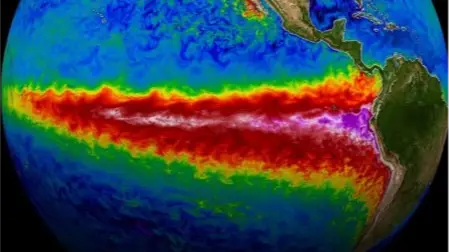
'Super El Nino' is forming in the Pacific Ocean with devastating global consequences predicted

Scientists say the powerful 'super El Niño' is developing in the Pacific Ocean could lead to the warmest year on record in 2027.
As well as record global temperatures, the strong version of the natural climate pattern may lead to severe weather, food shortages, and major humanitarian problems around the world.
Recent data shows parts of the Pacific are already about 0.5C hotter than average, and forecasters expect temperatures to keep rising over the coming months.
Weather agencies including NOAA in the US, Australia’s Bureau of Meteorology, and the European weather centre all believe there is a strong chance the event will become very powerful by the end of the year.
Advert
"El Niño refers to a sustained period of warmer‑than‑average sea surface temperatures across the central and eastern equatorial Pacific Ocean," the Met Office explains.
"It forms part of a natural cycle known as the El Niño–Southern Oscillation, which alternates between warm (El Niño) and cool (La Niña) phases."
The strongest El Niño so far took place in 1997-1998. According to The Guardian, it killed 23,000 people and caused £21 billion to £28 billion in damage.
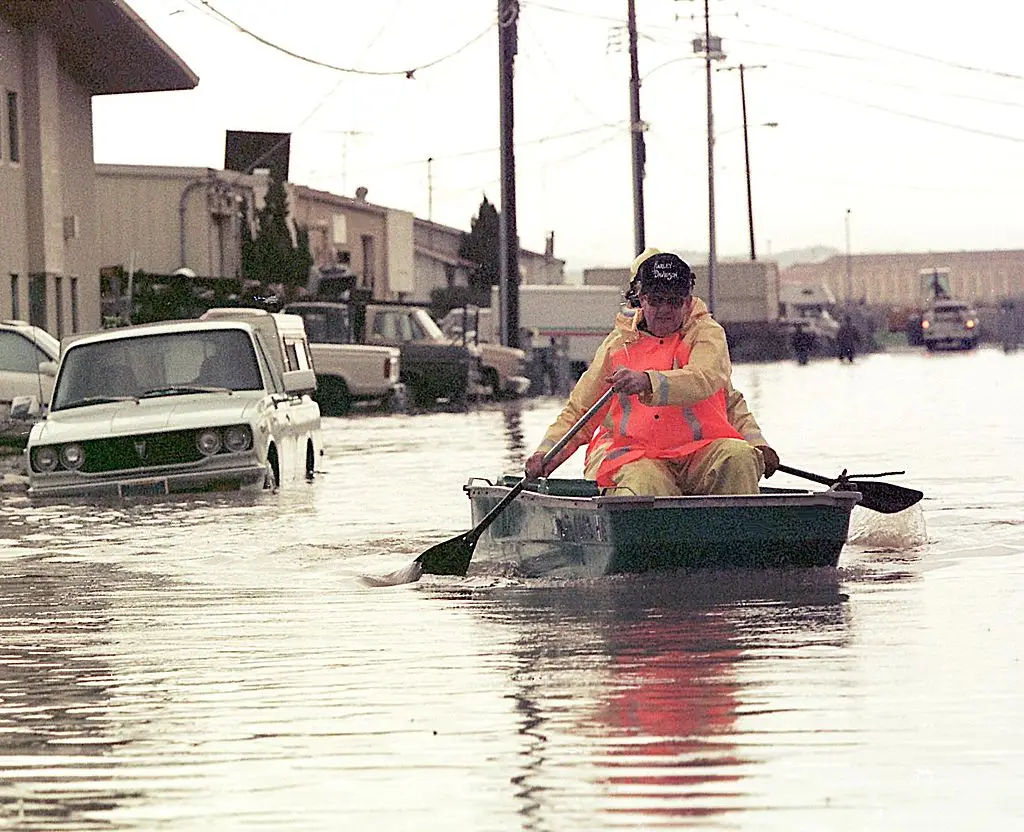
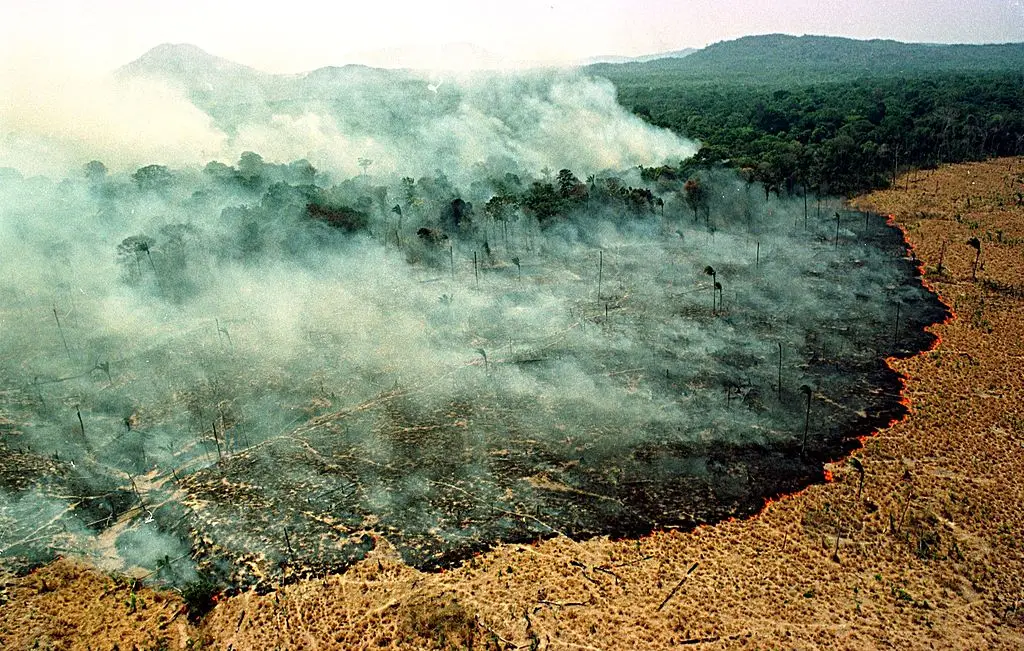
It resulted in floods, cyclones, droughts and wildfires.
Another El Niño event in 2015 saw a record-breaking hurricane season in the central north Pacific, water rationing in Puerto Rico, severe drought in Ethiopia, and a one-billion-gallon reservoir running dry in Antigua, according to the NOAA.
In the UK, December 2015 saw some of the worst flooding the country has ever seen, which was also linked to El Niño.
The consequences could be even more severe if scientists are right about an upcoming 'super El Niño'.
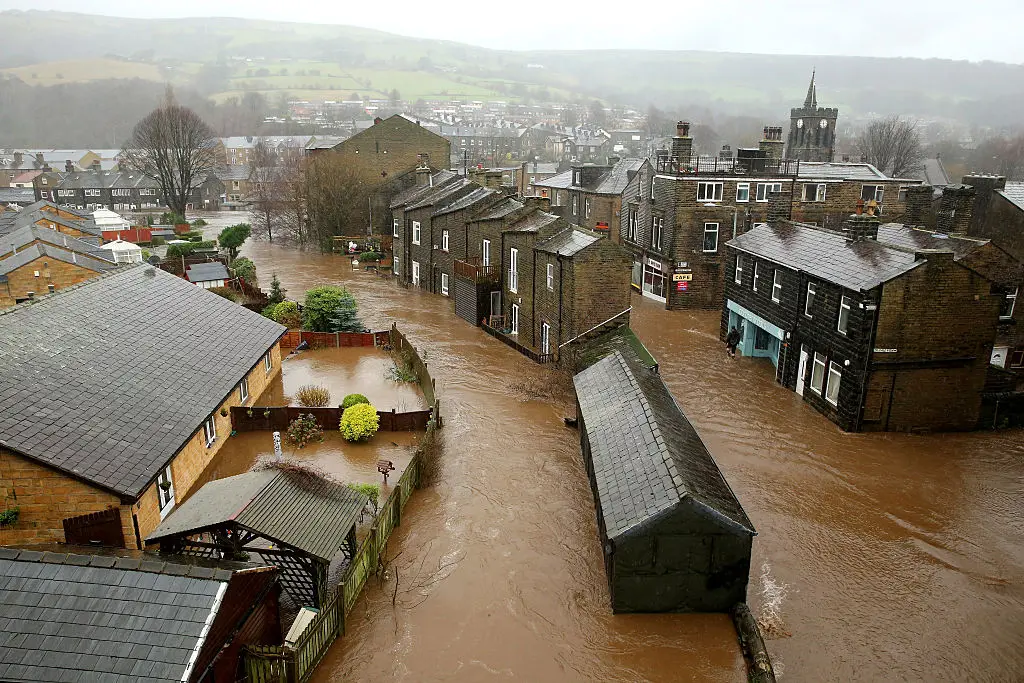 2015's El Nino event saw severe flooding in the UK (Christopher Furlong/Getty Images)
Climate is being 'shaped by extremes'
"April 2026 adds to the clear signal of sustained global warmth," Samantha Burgess, the strategic lead for climate at the Copernicus Climate Change Service, added.
"Sea surface temperatures were near record levels with widespread marine heatwaves, Arctic sea ice remained well below average, and Europe saw sharp contrasts in temperature and rainfall; all hallmarks of a climate increasingly shaped by extremes."
Experts say super El Niño events can trigger:
- Extreme global heat
- Flooding in some regions
- Droughts and wildfires in others
- Crop failures and food shortages
- Coral bleaching and damage to fisheries
'The strongest El Niño event so far this century'
The Met Office has warned this could cause 'some of the most impactful episodes in recent decades'.
“Other organisations around the world have other definitions and thresholds for what constitutes El Niño conditions, but this will be such a significant event, if it happens, that it will be above all of those thresholds and there will be no doubt that we’re in an El Niño,” said Grahame Madge, climate science communicator at the Met Office.
“A ‘super’ El Niño is not a term we subscribe to, but it does underpin the fact that this is likely to be a significant event.
“Scientists are telling us that this could be the strongest El Niño event so far this century, comparable to the notable El Niño event in 1998.”
Link to climate change
While many of the warmest years on record are El Niño events, this warming effect coincides with the trend driven by human‑induced climate change.
Grahame added: “Almost 20 years later, background temperatures have continued to increase as a result of human-induced climate change. In 2023 we had the first year in which global temperatures were 1.4°C above pre-industrial levels, we’ve since had two more years in which we’ve hit those levels.
"With an El Niño it’s likely that next year will be a year above 1.5°C when compared with pre-industrial levels.”
How does an El Niño year happen?
Strap in, folks. It’s time for some science.
It all starts with something called trade winds, which are permanent winds around the equator, which usually blow from east to west. So in the equatorial Pacific, they blow from the Americas towards Australia and New Zealand.
As the wind blows the water east, it is warmed by the sun, so by the time it gets to the other side of the Pacific, the warm water causes hot air to rise, leading to warm, wet and unsettled weather. Meanwhile, colder water from deeper in the ocean rises in the east to replace the water blown west.
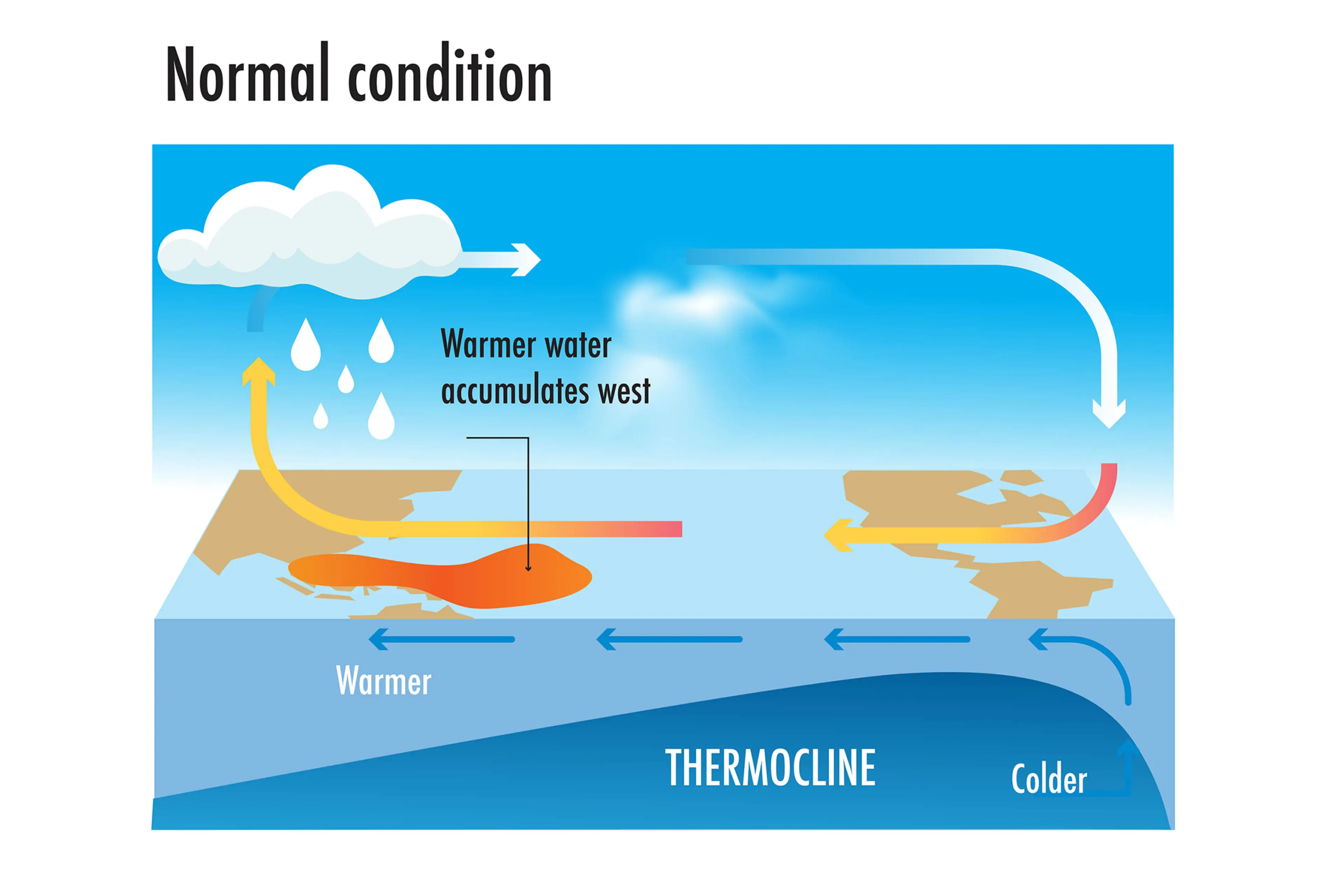
But during El Niño years, this gets disrupted.
Trade winds are weakened or even reversed, the temperature difference between the east and west is cancelled out, and usually cold parts of the ocean warm up.
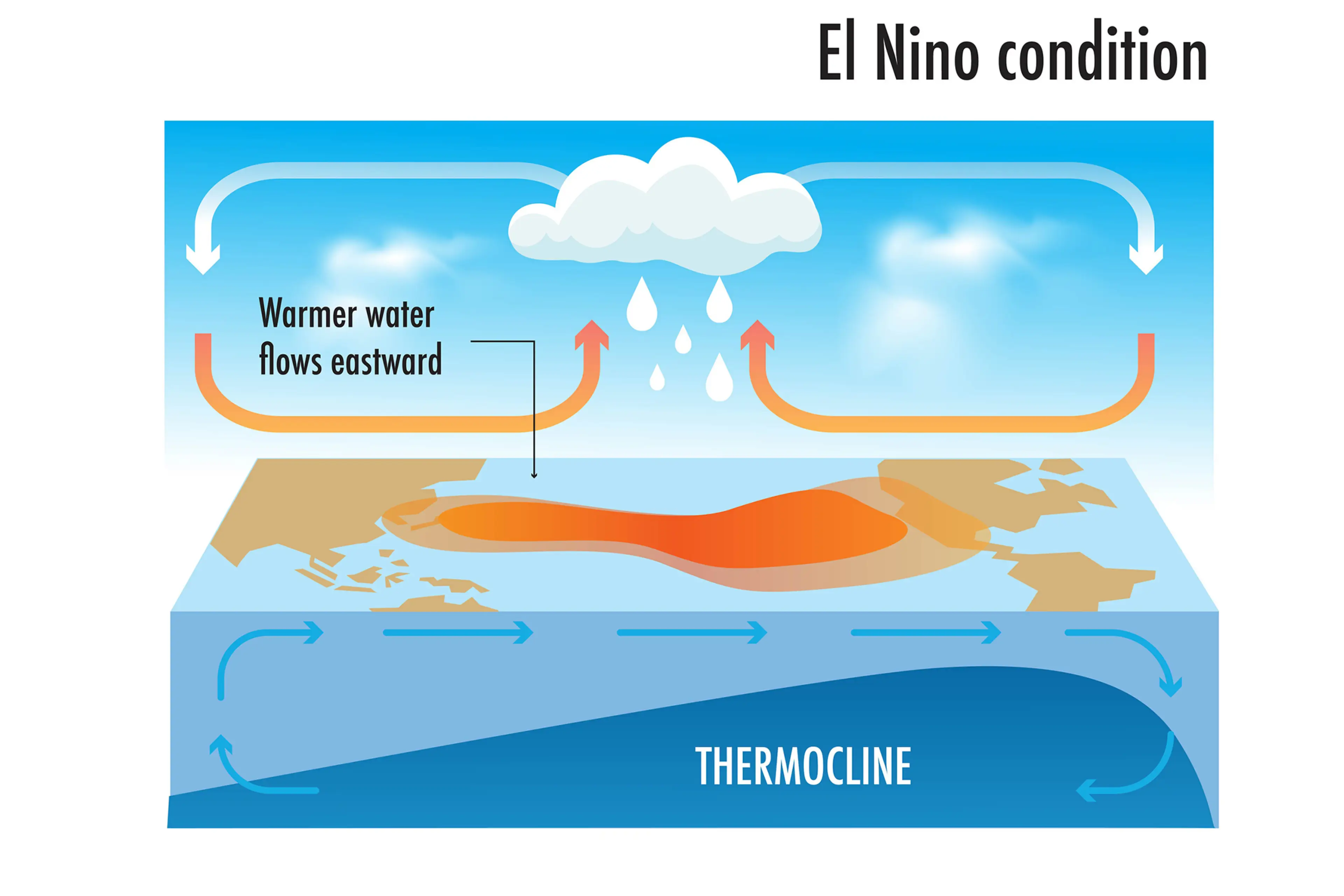
Rainfall and wind patterns change across the equatorial Pacific, which has a knock-on effect around the world.
Anyone else's head hurt a bit?
Topics: Global Warming, Weather, World News, Environment
 Anish Vij