UN issue new warning over Super El Niño that will be 'devastating' for the next 18 months

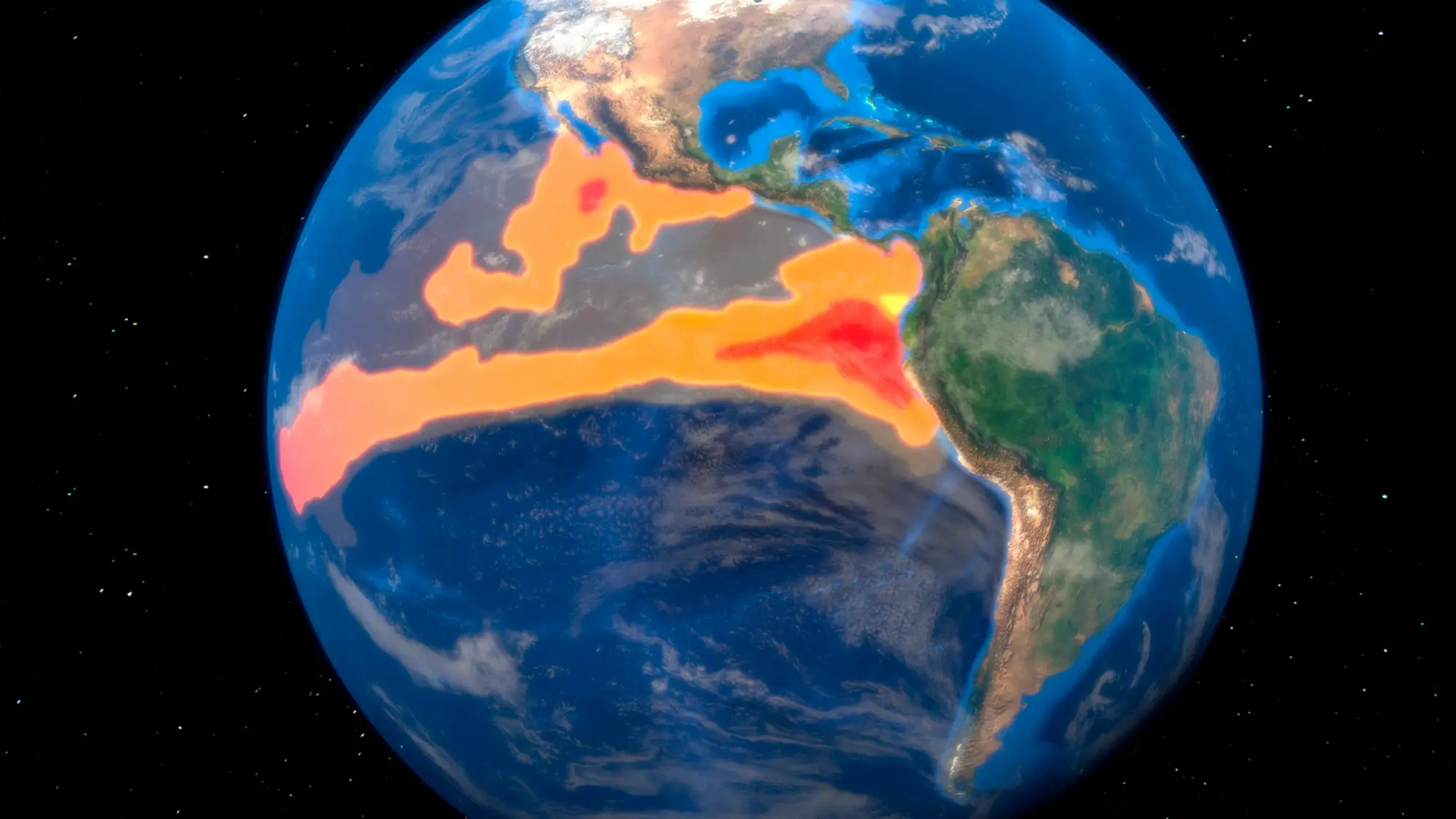
A forthcoming weather event of catastrophic proportions, known as the 'Super El Niño', has been discussed by the United Nations.
Currently sitting at an 80 percent chance of formation before September - there's a 90 percent likeliness before November, too - this agriculturally-devastating natural force could well be the most powerful incarnation of an El Niño we've seen this century, although forecasters highlight there's still some uncertainty around that.
It's now been two years since the last arrival of an El Niño, which raise global temperatures and worsen rainfall across multiple continents.
Earlier today (June 2), the World Meteorological Organisation's secretary general Celeste Saulo claimed that predictions for this latest occurrence are 'spread large', while her UN counterpart António Guterres warned that the world 'must treat it as the urgent climate warning it is.'
Advert
"El Niño conditions will pour fuel on the fire of a warming world. Impacts will hit even harder, travel even farther, and cross borders with devastating speed," he added.
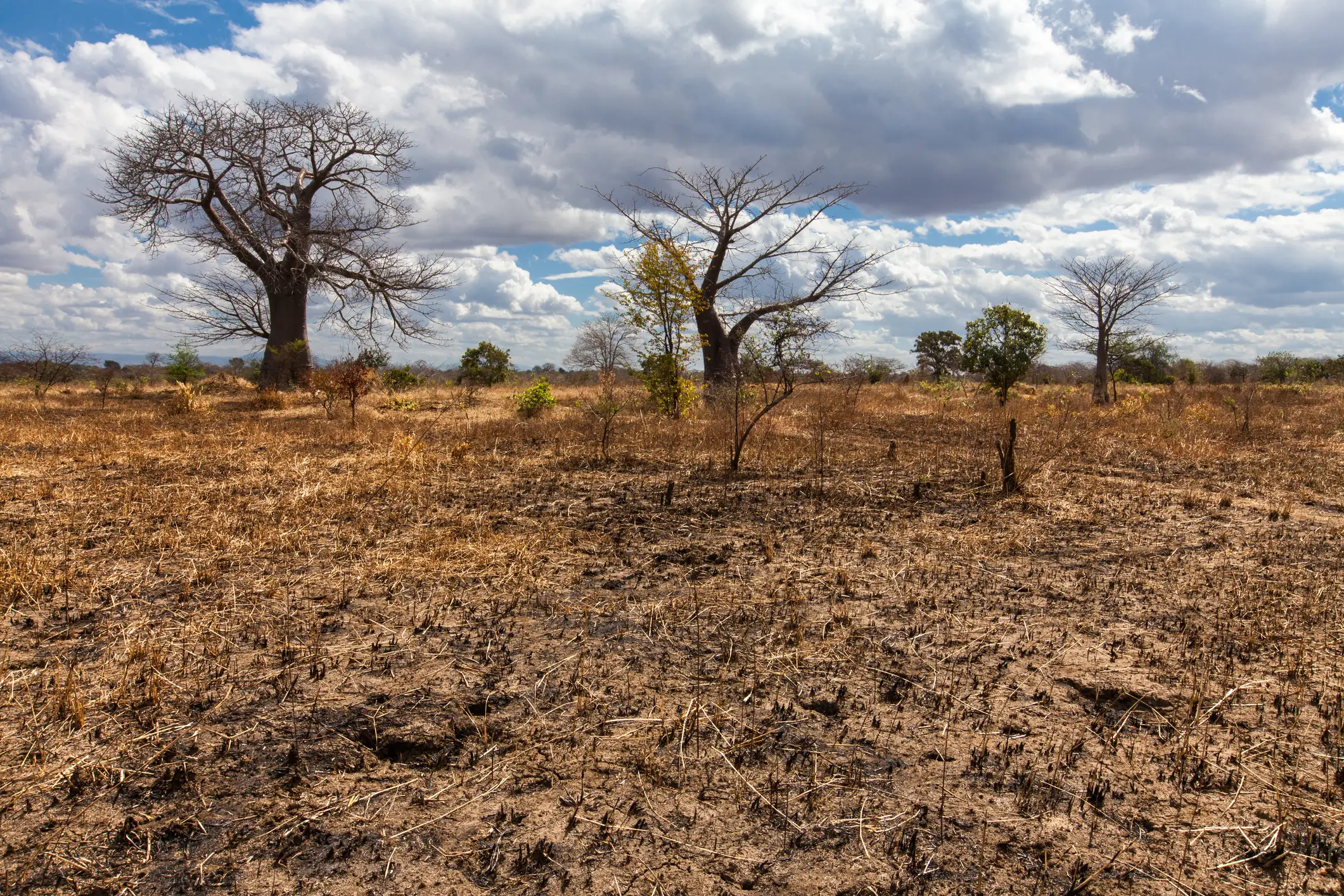
The WMO said that unnaturally high temperatures were due to hit all reaches of our planet from now until September, with extreme rain and drought an unfortunate byproduct.
South America, southern parts of North America, the Horn of Africa and central Asia traditionally receive the deluge, while that terrible dryness lands at the door of Central America, the Caribbean, Australia, Indonesia, South Asia and northern parts of South America.
Energy & Climate Intelligence Unit's Gareth Redmond-King highlighted how food supplies are already under serious strain, so the imminent emergence of this 'Super El Niño' is especially bad news.
"The havoc El Niño will wreak as it likely delivers another hottest year, in 2027, will be devastating for many farmers, and a question of life or death for far too many people," he commented.
Tragically, donors to regular disaster zones like the UK and US have slashed their foreign aid budgets at the worst possible time.
"Climate finance is not at its peak, I would say, but early-warning systems have been and still [are] a priority," said Saulo. "Of course, we still need more resource mobilisation, in terms of funding those countries that need the support.
"I would say we need to improve that, but that is not the only limit in this case. The implementation is also a challenge for the world."
Guterres went on to share: "The only effective response is climate action equal to the crisis – ending the addiction to fossil fuels, accelerating the shift to renewables, protecting the most vulnerable, and delivering early-warning systems for all."
Speaking to LADbible about the onrushing weather event, meteorology professor Emily Black claimed that 'the impacts of El Niño are generally not strong enough to require a specific response'.
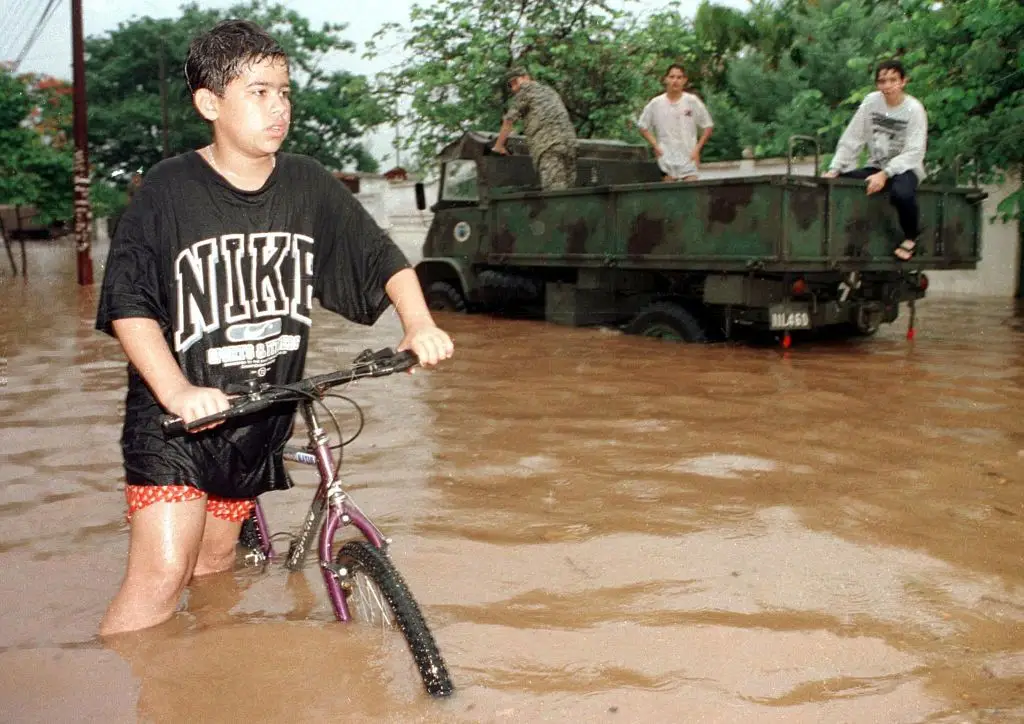
"However, as in any winter, it is sensible to remain prepared for storms, flooding and occasional cold snaps," Professor Black said.
"In tropical regions, preparedness depends much more directly on the expected regional impacts of El Niño.
"For example, where El Niño is associated with drought, farmers may consider using more drought-tolerant or faster-maturing crop varieties, and may need to delay planting slightly if the rains are slow to become established."
How does an El Niño year happen?
Strap in, folks. It’s time for some science.
It all starts with something called trade winds, which are permanent winds around the equator which usually blow from east to west. So in the equatorial Pacific, they blow from the Americas towards Australia and New Zealand.
As the wind blows the water east, it is warmed by the sun, so by the time it gets to the other side of the Pacific, the warm water causes hot air to rise, leading to warm, wet and unsettled weather. Meanwhile, colder water from deeper in the ocean rises in the east to replace the water blown west.
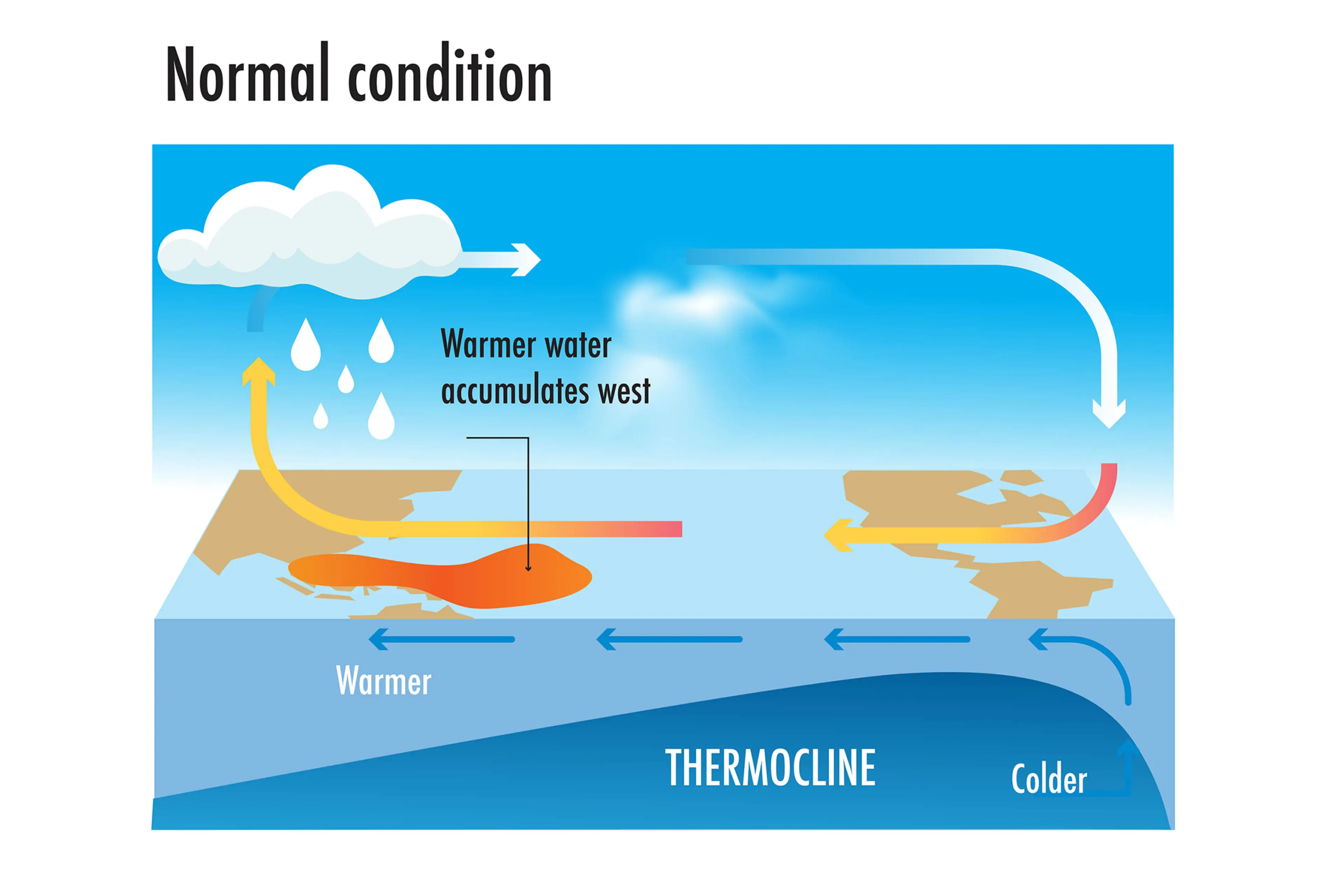
But during El Niño years, this gets disrupted.
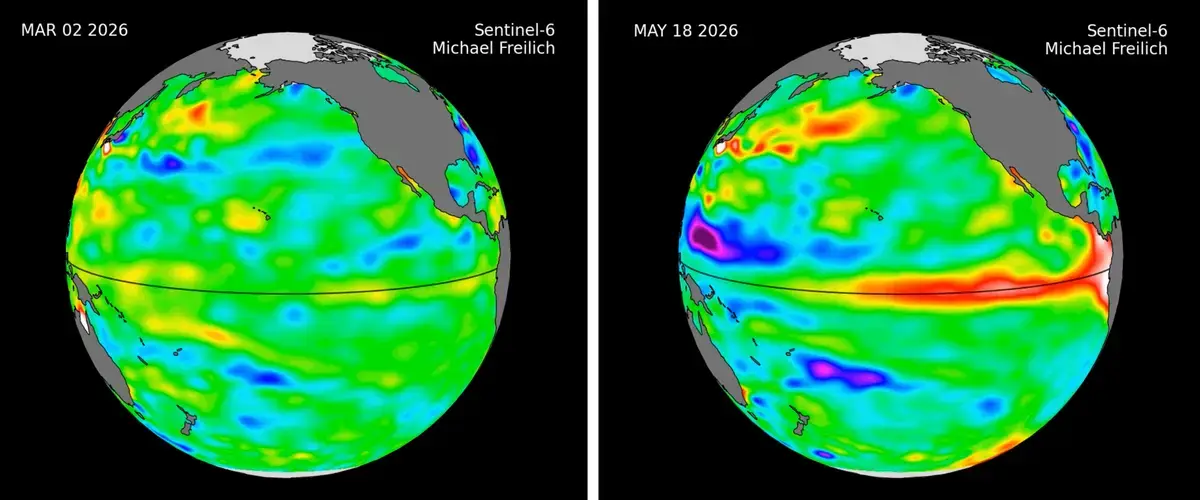
When trade winds are weakened or even reversed, the temperature difference between the east and west is cancelled out, and usually cold parts of the ocean warm up.
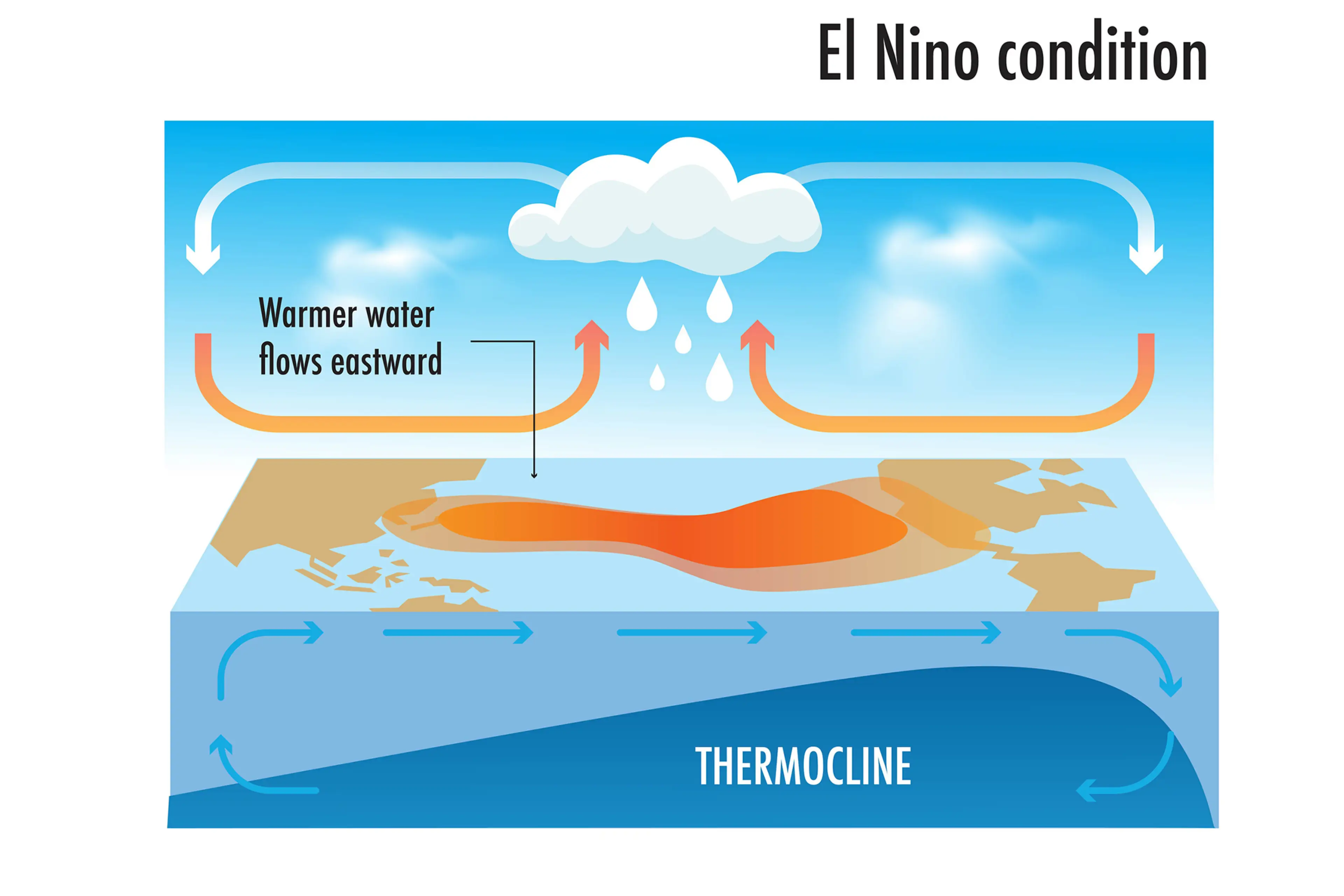
Rainfall and wind patterns change across the equatorial Pacific, which has a knock-on effect around the world.
Anyone else's head hurt a bit?
Topics: Global Warming, Science, Weather, World News, El Niño
 Dan Seddon